Aura Dark Web Scanner: What the Free Scan Misses and How to Close It
The Aura dark web scanner tells you when credentials leak, not what to do next. Here's why detection without a response plan leaves executives exposed.
The Aura dark web scanner is a detection tool, not a protection strategy. It will tell you when your credentials surface in a breach dump, but it will not remove them, stop the criminal from using them, or keep the next batch from appearing. That gap between detection and response is where executives actually get hurt, and it is the difference between buying a service and building protection.
Most reviews treat dark web monitoring as a fire alarm: install it, wait for the siren, and you are covered. The alarm is the easy part. What matters is whether you have a fire department on the other end of that call, and whether anyone taught the alarm to distinguish a grease fire from a garbage fire.
What the Aura Dark Web Scanner Actually Tells You
The Aura dark web scanner performs a focused job: it checks known breach databases and monitored dark web marketplaces for your email addresses, phone numbers, passwords, and financial accounts. When one of those identifiers shows up in a newly indexed dump, the service generates an alert telling you which credential leaked and where it appeared.
That alert is genuinely useful information. It tells you that a credential you trusted is now in the hands of people who buy and sell such things. It tells you the breach happened somewhere, even if the company that leaked your data has not disclosed it yet. It gives you the chance to rotate that password before someone uses it against you.
But the scanner's horizon is limited. It watches for your identifiers on the surfaces it can index, which means it sees what crawlers can reach. It does not act on what it finds. It will not delete that credential from the seller's list. It will not trace who bought it or what they plan to do with it. It will not tell you whether that leaked password also guards your corporate email, your bank account, or your family's shared documents. That judgment sits with you, and most consumers are not equipped to make it under pressure.
The key benefit of dark web monitoring services is not the alert itself. The benefit is the head start: the hours between detection and exploitation where a credential is still usable against you but not yet spent. Whether you get value from that head start depends entirely on what happens after the alert fires.
How the Detection Engine Works
Dark web scanning operates on a continuous crawl-and-match model. The service maintains a database of known breach data harvested from public dumps, paste sites, and monitored marketplaces. It also crawls dark web forums and shopfronts accessible through Tor, indexing mentions of email addresses, usernames, and other identifiers that its crawlers can parse.
When you enroll an identifier, the scanner runs it against that database and establishes a baseline. From then on, it re-checks on a cycle, flagging new matches as they appear in fresh dumps or forum posts. The matching is largely string-based: your email address appears verbatim in a credential dump, and the system flags that exact string.
The limitation is structural. Many breach databases circulate as password-protected archives or encrypted files that crawlers cannot open. Some marketplaces require authentication or captcha-solving that defeats automated indexing. The scanner sees the slice of the dark web that is crawlable, which is a meaningful fraction but never the whole. Your credential can be circulating in a closed Telegram channel or a private forum that no scanner reaches, and you will never get the alert.
Another constraint: the value of the match depends on the quality of the data behind it. When a scanner flags your email in a dump, the associated password may be hashed or truncated. The alert tells you to rotate the credential, but it rarely tells you which of your twelve passwords leaked, because the dump itself is partial. You are left deciding whether to rotate everything or gamble that the exposed one was low-value.
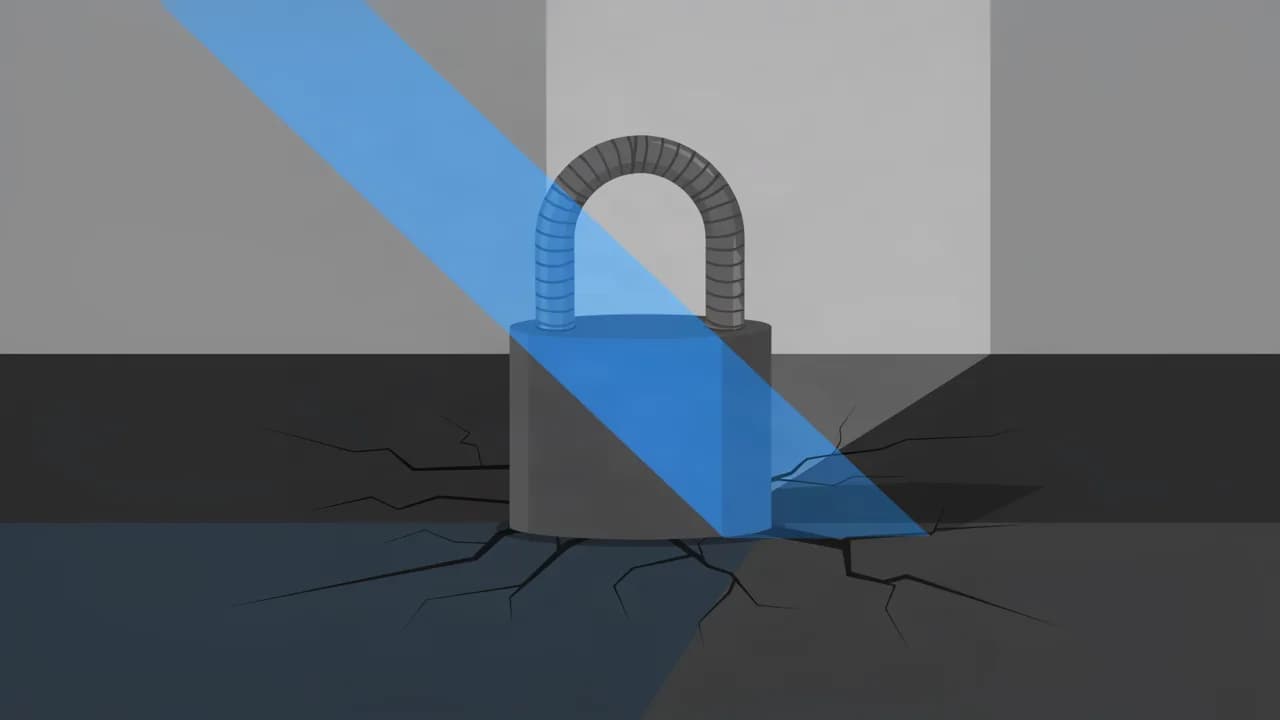
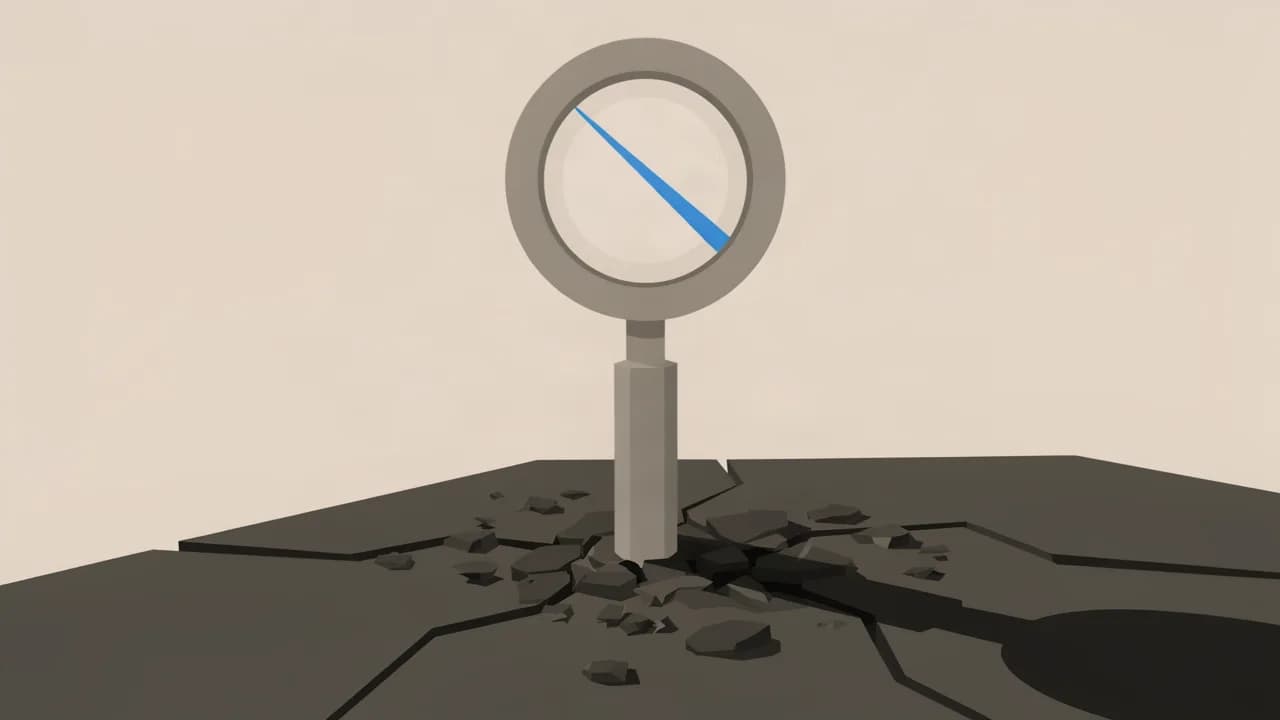
This is where the abstraction leaks. The scanner presents itself as a comprehensive watchtower, but it is actually a spotlight sweeping a dark room. It illuminates what it can reach, and it leaves the corners in shadow. A practitioner who understands the mechanism treats every alert as probable cause, not as proof of the full extent of exposure.
Why Detection Alone Fails Executives
The structural weakness of consumer dark web monitoring is that it stops at the moment of detection. It never asks the question that matters operationally: what do we do with this information now?
Consider what an alert actually requires. A credential has leaked, which means you need to identify which account it guards, rotate that password, check whether the same password protects other accounts, and rotate those too. You need to determine whether the leaked credential maps to a corporate system, a personal account, or a shared family login. You need to assess whether the breach that produced the dump also exposed your address, your date of birth, or your Social Security number, pieces that enable identity fraud beyond credential stuffing.
A consumer scanning service does none of that triage. It fires an email notification and returns to watching. The work of response falls on you, and it falls at the worst possible moment: the instant you learn you are exposed, with no plan, no checklist, and no one to call.
The deeper problem is that executives are not ordinary consumers. A leaked personal email for a typical user means spam and perhaps a compromised shopping account. The same leak for an executive means a foothold for a targeted campaign: a way to build a credible phishing message, a clue to the executive's cloud storage password habits, a piece of the puzzle for someone running social engineering against the company. Consumer tools are not built to weigh that difference, and their alerts arrive without that context.
We have written about how automated data removal services only work when paired with intelligence; the same principle governs monitoring. A scanner that detects but cannot respond is a sentry who shouts and then goes back to sleep. The threat does not pause because you were notified.
Building a Response Workflow Around the Alerts
The step-by-step approach to dark web monitoring is not about the scanner. It is about the procedure you attach to every alert that arrives.
The discipline starts with inventory. Before a breach touches you, you should know every credential that matters: corporate email, personal email, financial portals, cloud storage, and the accounts your family shares with you. Each one needs a unique password and a documented rotation path. When an alert fires, you want to know in seconds whether the exposed identifier maps to a high-value account or a throwaway forum login.
The second step is triage. When the alert arrives, you classify it by severity before you act. A credential dump that includes your corporate email plus a password that guards your CRM is an emergency. The same email on a list from a breached newsletter platform is noise. The scanner will not make that call for you, and a response procedure that treats every alert as urgent burns your team's attention on false alarms until the real one slips through.
The third step is the response itself. Which actions follow depend on what leaked: rotate the credential, check for reuse across other accounts, enable multifactor authentication everywhere it is available, and review recent login activity for signs the credential was already used. If financial data leaked, place a fraud alert and watch account activity. If the dump included documents or files beyond credentials, the response escalates to a full incident review.
The fourth step is the follow-through that most people skip. Removal requests, when they are possible, must be filed with the data broker or the site hosting the leaked material. And because the dark web restocks itself, the re-listing trap that undoes one-time cleanups means you re-check on a schedule, not once and done. A monitoring service that does not re-scan is a snapshot, not a watch.
The workflow is only as strong as its weakest step, and for most buyers the weakest step is the first one. They enroll an email address in a scanner without building the inventory, the triage rules, or the response procedure, and then they are surprised when the alert arrives and they have no idea what to do.
Where Consumer Dark Web Monitoring Breaks Down
Consumer dark web monitoring is built for a threat model that executives do not fit. The product assumes the risk is credential theft and identity fraud, and it optimizes for detecting those two things. Both are real, but neither is the primary threat facing a high-profile individual.
Executives face targeted information warfare. Their personal data is not just stolen wholesale in a mass breach; it is collected deliberately, correlated across sources, and used to build a profile that enables spear phishing, social engineering, or reputational attack. The person assembling that profile does not need a dark web marketplace. They need a people-search site, a corporate directory, a social media account, and a few hours of patience.
Consumer scanners do not watch those channels. They do not monitor what a hostile actor can assemble from public records and purchased data. They do not flag the dossier someone is building against you, because there is no single breach event to detect. The assembly is gradual, distributed, and invisible to a tool that looks for your email address in a credential dump.
The other structural gap is response. When a consumer scanner detects something, it sends a notification and perhaps offers credit monitoring. It cannot deploy an analyst to investigate who is collecting your data and why. It cannot run OSINT to trace the actor behind a threat. It cannot coordinate the removal of your personal information from the data brokers that supply the raw material for profiling. It is a detection tool without a response arm.
For a private individual, that may be acceptable. The cost of a credential leak is manageable, and credit monitoring covers most of the damage. For an executive whose position makes them a target, the gap between detection and response is where the damage compounds. The scanner tells you someone has your data. It does not tell you what they plan to do with it, and it cannot stop them.
Deciding Whether an Alert Demands Action
The signal you need to evaluate is not whether the alert fired. It is what the alert implies about your exposure, and whether you have the capacity to respond.
Start with the account at risk. If the alert involves a credential that guards financial accounts, corporate systems, or cloud storage holding sensitive documents, treat it as urgent regardless of how the breach happened. Rotate the credential immediately, check for reuse, and review login history for unauthorized access. A low-value account that shares a password with a high-value one is also urgent, because the leaked password reveals your password habits to whoever holds the dump.
Next, assess the context. Was the alert triggered by your personal email or a corporate identifier? A corporate email appearing in a breach dump is a different problem from a personal one, because it suggests the attacker has a vector into your organization. That warrants coordinating with your security team, not just changing a password.
Then consider your threat model. If you are a private individual, a credential alert is a nuisance with a defined fix. If you are an executive, a public figure, or someone who handles sensitive information, the same alert is reconnaissance. The question is not whether the credential is still valid. It is whether the person holding it is building a profile for a larger attack.
When the alert reveals financial data, a full Social Security number, or other identity markers in a dump, the response escalates beyond password rotation. Place fraud alerts with credit bureaus, monitor account activity, and consider whether the exposed data enables someone to impersonate you or your family members.
When the alert is a false positive, or when the exposed account is genuinely low-value and the password is unique, you can log it and move on. The discipline is having a defined answer for each case before the alerts arrive, so you are not improvising decisions about your security at the moment you learn you are exposed.
How Area 52 Turns Alerts Into Protection
We built our executive protection model around the gap this article has been describing. Dark web monitoring is one component of a larger system, not the system itself. We run continuous dark web sweeps as part of our Overwatch service, but the sweep feeds into a response architecture that starts where consumer scanners stop.
Each client is assigned a dedicated Digital Guard whose job is triage. When an alert fires, that analyst determines severity, investigates the source of the leak, and coordinates the response. They do not send an email notification and return to watching.
The distinction matters because we combine reputation management with cybersecurity. The same engagement that monitors dark web activity also works to suppress your personal data from the data brokers and people-search sites. We treat the identification phase and the response phase as one system, because protection is not complete until the exposed data is removed and the source of future exposure is closed.
We also deploy positive content creation and amplification, so that when a hostile actor searches your name, the results they find are the content we control, not the dossier they assembled. That is information warfare defense, and it is a different discipline from consumer identity protection.
Frequently Asked Questions
Does Aura scan the dark web?
Yes, Aura's scanner checks known breach databases and monitored dark web sources for your email addresses, phone numbers, passwords, and financial account numbers. It alerts you when one of those identifiers appears in a new data dump or marketplace listing. The scan is continuous, so new matches trigger fresh alerts rather than requiring manual re-checks.
Does Aura detect fake websites?
Aura's monitoring is primarily focused on credential and identity data found in breach databases and dark web marketplaces. Its fraud protection features include warnings about phishing and suspicious activity tied to your financial accounts. The service does not claim to track impersonation domains or lookalike websites targeting your name.
Is Aura.com legitimate?
Aura is an established consumer security company offering identity theft protection and credit monitoring alongside its dark web monitoring service. Its products are marketed to individuals and families seeking protection against identity fraud and credential theft. The service performs the detection functions it advertises, though its response capabilities are limited to alerts and consumer-facing guidance.