
Choice Digital Trust: Why the Decision Should Be Deliberate, Not Default
Most executives inherit their digital protection from whoever answered the phone first. Deliberate choice means vetting the operator, the re-scan cadence, and the exit terms before you sign.
By the Area 52 team
8 min read
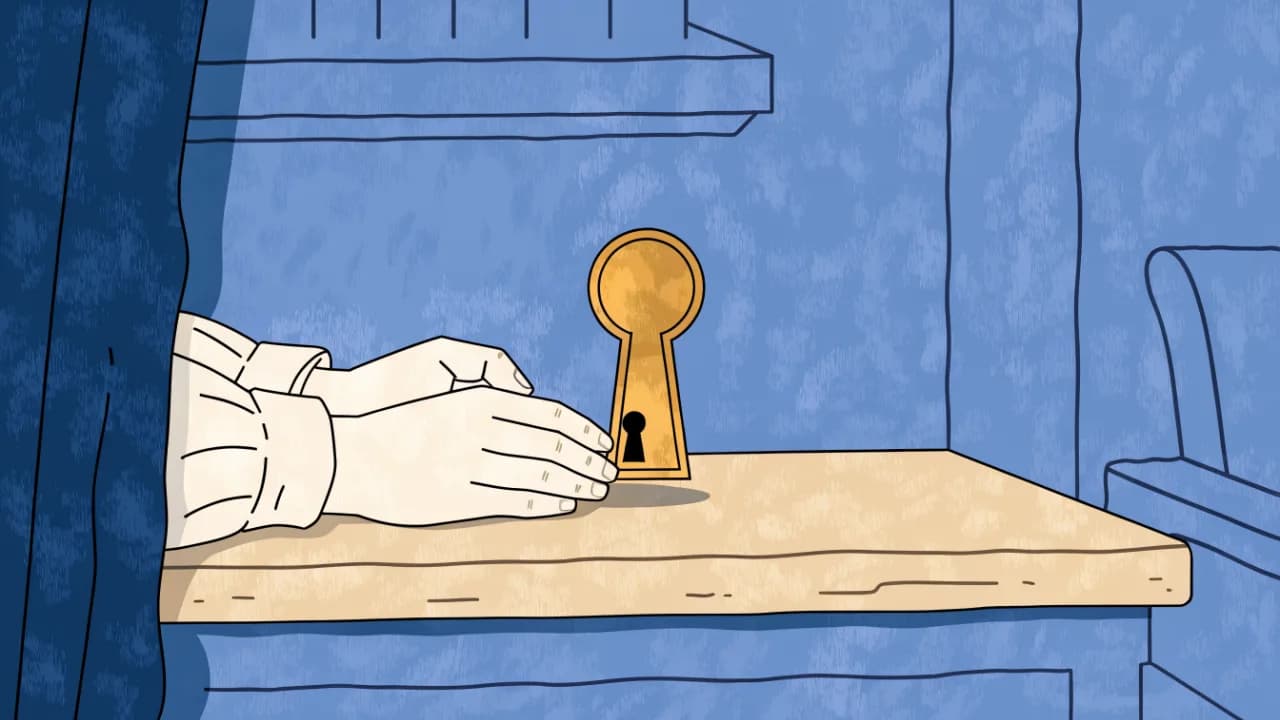
Choice digital trust is a vetting decision: you decide who holds your personal data, on what cadence, and under what exit terms, before the first removal request is filed. Most executives never make that decision. They inherit it. A vendor gets introduced through a board contact, a family office referral, or a search result, and the relationship is ratified by inertia rather than by evidence. That inheritance is the expensive part, and it is entirely avoidable.
The uncomfortable reality underneath the whole category is that the entity you hire will hold a map of everything about you that is currently exposed. A provider that knows every broker listing, every breach record, and every alias attached to your name is, functionally, a concentrated version of the risk you are paying to reduce. That makes the choice of operator a security decision in its own right, not an administrative one.
The Short Version
A digital protection engagement has three moving parts: discovery, removal or suppression, and verification on a repeating schedule. You are buying the third one as much as the first two. A scan that finds your home address on eight people-search sites but files nothing has produced reconnaissance, not protection. The same scan that files opt-outs, confirms each one landed, and re-checks on a schedule is the product. Everything before that point is a demo.
So the correct question is not "which vendor has the best dashboard." It is "who owns the written finding, who files the requests, and what happens on the day I stop paying." Get a clear answer to all three and you have made a deliberate choice. Accept a demo and a slide deck and you have not.
What People Mean When They Say It
Digital trust, in this context, is the confidence that a specific third party will handle your exposed personal information competently, lawfully, and reversibly. It is not a feeling about a brand, and it is not the same thing as a privacy policy. It is a set of verifiable properties about an operator: what they collect, where they store it, who can read it, how they dispose of it, and what you retain if the relationship ends.
The term gets muddled because three different services get marketed under one roof. Consumer removal tools target people-search sites and data brokers on a recurring basis. Enterprise identity platforms monitor credential exposure and infostealer activity. Investigative firms handle targeted human threats, insider risk, and pre-hire verification. Those are different jobs with different cadences and different failure modes, and a provider that claims all three without naming which one you are actually buying is telling you something about its sales process.
Regulation has shifted the ground under all three. PADFAA prohibits data brokers from selling, releasing, disclosing, or providing access to personally identifiable sensitive data about Americans to foreign adversaries, and the Federal Trade Commission sent letters to 13 data brokers reminding them of those obligations. That matters to how you read a vendor's pitch: compliance pressure changes broker behavior at the margin, and it does not remove anything on its own.
How It Works Under the Hood
Removal work runs on a loop, and the loop is the whole thing.
Discovery queries the public-facing layers where identity data accumulates: people-search aggregators, marketing data cooperatives, public records, breach dumps, and increasingly the caches that large language models draw on. Each source has its own opt-out mechanism, its own response time, and its own appetite for re-listing.
Filing is where most of the labor sits. Every broker takes a different form of request, verifies identity differently, and honors the request on its own clock. A request that goes unanswered is not a request that failed; it is a request that needs escalation through a different channel.
Verification is the step buyers overlook when comparing quotes. A provider that files a thousand opt-outs and never re-checks has produced a thousand unverified actions. The re-scan is what converts activity into coverage.
Then the loop restarts. Brokers refresh from public records, from purchase data, and from each other. A suppressed record can reappear weeks later through a data feed that had nothing to do with the original removal. This is why the cadence in a contract matters more than the count of removals in a proposal. Our own work pairs this with vulnerability scans and penetration testing because the exposed-data problem and the technical-exposure problem are the same attack surface seen from two angles.
The Step-by-Step Approach
The sequence below is ordered deliberately: each step produces an artifact the next step depends on. Skip one and the next has nothing to work from.
- Write down the decision criteria before you talk to anyone. Name the five or six properties you will judge on, in your own words. Do this first, because a strong pitch will overwrite an unwritten list within twenty minutes.
- Run a discovery pass and read the raw output. Not the summary graphic. The underlying list of where your name, addresses, emails, and phone numbers surface. This is the same class of information a free footprint scan produces, and its only job here is to size the problem.
- Test the removal mechanism on a small scope. Ask for a defined batch of targets, a filing date, a confirmation date, and a re-check date. The response pattern tells you more than any reference call.
- Request the written finding and the retention terms. Ask what happens to the discovery output if you terminate, how long they store it, and who has access. Get this in the contract, not the conversation.
- Set the review cadence with dates on the calendar. Quarterly at minimum, with a named owner on your side who receives the output.
The step most people invert is the first one. Criteria written before the pitch are durable; criteria written after are a rationalization of whatever the salesperson emphasized.
What to Look For
Judging a protection provider is mostly a matter of knowing which dimensions separate a durable engagement from a demo. Six earn their place on the list.
| Dimension | What to look for |
|---|---|
| Scope definition | Named source categories with counts, not "thousands of sites" |
| Verification cadence | Scheduled re-checks with dates, not a one-time report |
| Data handling | Written retention and deletion terms you can hold them to |
| Operator model | A named person accountable for your account, not a shared queue |
| Cost structure | Recurring suppression priced separately from one-time assessments |
| Exit terms | Explicit ownership of findings produced during the engagement |
Cost deserves its own note. Executive protection budgets often stall because the buyer cannot tell which line items recur and which are one-time. A renewal-based removal retainer and a single penetration test have completely different cost curves, and a quote that blurs them will produce a budget argument later. The structure of the quote, rather than its total, is the diagnostic. The protection firm buyer's guide walks the same dimensions in more detail if you want a longer checklist to score against.
Common Mistakes to Avoid
Treating the initial scan as the deliverable is the error that costs the most, because it feels like progress. You get a report, an alarming list, and a sense of completion. Nothing has been filed, nothing has been verified, and the same list will regenerate within months. Discovery is a measurement, and measurements do not protect anyone.
Reading regulatory pressure as a substitute for contracted work runs a close second. Enforcement does move broker behavior, and the penalty exposure is real: a PADFAA violation may carry civil penalties of up to $53,088 per violation according to the Federal Trade Commission. That is a reason brokers audit their own compliance. It is not a reason to assume your specific record is gone.
The quieter mistake is letting the provider hold the only copy of the finding. If your discovery output lives exclusively in a vendor portal, you cannot audit coverage, you cannot hand the file to counsel during a dispute, and you cannot switch providers without starting over. Ownership of the artifact is a negotiation you have once, at the start.
And a fourth, which is really a failure of sequencing: choosing a provider before writing criteria. The pitch is designed to be persuasive, and it is delivered by someone who runs it several times a week to someone who sees it once.
When to Act
The decision point arrives earlier than most executives think. If your name, home address, or direct line appears on a broker site that a junior analyst could find in a search bar, you are already in scope. The relevant question is not whether the exposure exists but whether anyone has contracted to reduce it.
You should move deliberately now if any of these describe your situation: you have taken a public-facing role in the last twelve months, a merger or litigation is on the horizon, a family member's information surfaces alongside yours, or you have received physical mail at a private address that was never published. Each of those signals a specific exposure that a scan will confirm or clear within days.
Hold and wait if your exposure is genuinely low, static, and you have no public profile. That situation exists, though it is rarer than the people in it believe. Pivot away from a provider immediately if they will not put retention, verification cadence, and artifact ownership in writing. Those three refusals predict every other failure you will encounter downstream.
Abandoning the category entirely is the wrong read. The exposure does not pause while you deliberate; it compounds through the same feeds that generated it.
How We Approach This
We treat the engagement as one continuous operation rather than a set of purchased modules. We run data broker removal, dark web monitoring, vulnerability scans, and penetration testing as one engagement, because the exposed-record problem and the technical-exposure problem share an attack surface and are cheaper to defend together than separately.
Every client gets a dedicated Digital Guard, a named operator accountable for that account rather than a shared queue. When we find exposed records, we suppress personal data from data brokers, file the removals, and re-check on a schedule. The written finding is yours.
We also create and amplify positive content alongside the suppression work, because a search result that has been emptied is not the same as one that has been filled. Suppression without replacement leaves an absence; the absence gets noticed. Combining reputation work with cybersecurity is the structural difference between this engagement and a removal subscription, and we think the combination is the only version of the service that holds up over a multi-year horizon.
If you want to see what your exposure actually looks like before any of that, reach out and we will run the discovery pass.
Get new articles by email
New articles from Area 52, sent to your inbox.
By subscribing you agree to receive emails from Area 52 about new articles. You can unsubscribe at any time.