Online Reviews Examples That Show You What to Copy, Flag, and Fix
The best online reviews examples aren't the flattering ones. They are the ones that show a pattern: who verified the buyer, how fast the reply came, and whether the language matches a person.
By the Area 52 team
9 min read

The online reviews examples worth studying are a verified-purchase review that names the product and the moment, a five-star review that describes a problem the seller solved, a critical review with a specific remedy the business answered, and a burst of near-identical praise that shares one timestamp and one vocabulary. Read each as a pattern rather than a compliment or an insult: the review that says the most about a business is rarely the one with the highest star count. Most buyers rank reviews by stars and stop there, which is exactly why the examples below are organized by what they reveal instead of how they flatter.
Treat reviews as a live surface that buyers, partners, and adversarial actors read before you get a word in. That changes which examples are worth collecting: the ones that reveal a process, a gap, or a planted pattern, not the ones that make you feel good. Here is what the useful examples look like, and how each one teaches you something about the business behind it.
What Counts as a Useful Review Example
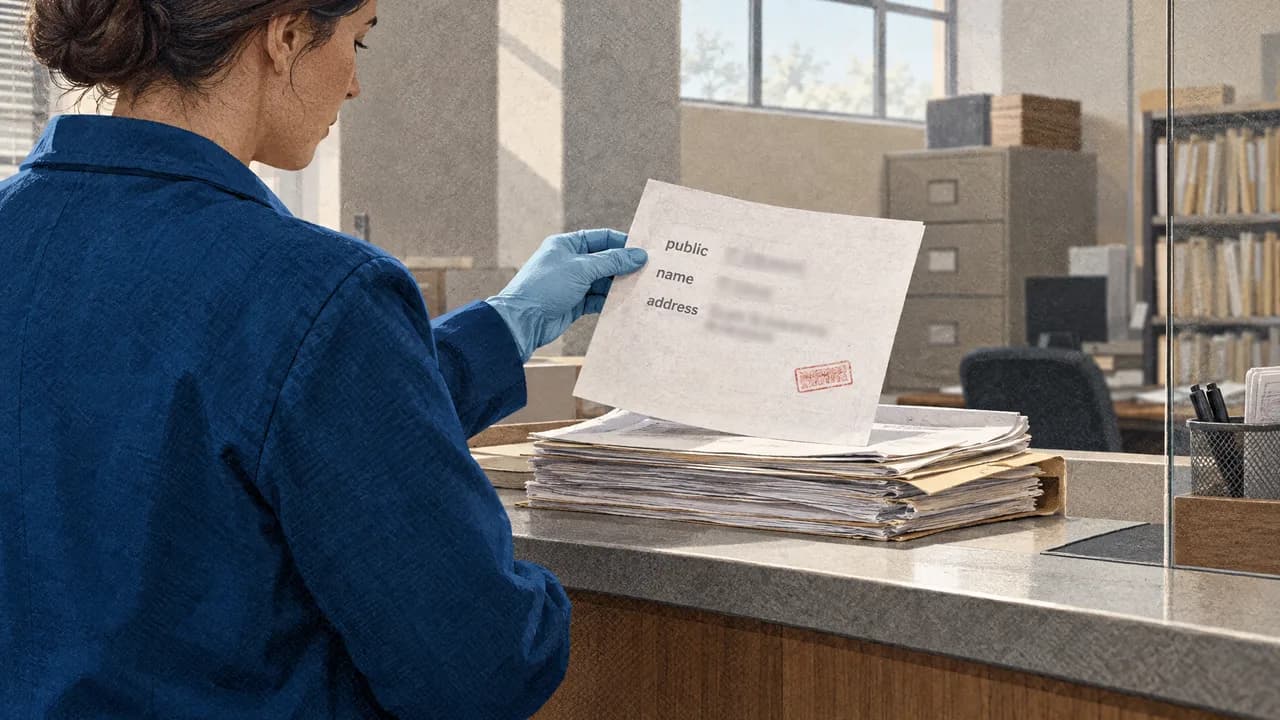
A useful review example is a real, platform-verified account of a specific purchase or service, with enough detail to show what happened and what the buyer expected. A review that says "great experience, highly recommend" is a mood. A review that says "the return took nine days and the second replacement arrived without the bracket" is evidence. The first tells you nothing you can act on. The second tells you which part of the operation leaked.
The difference matters because the reviews you collect become a record you will defend later. A template review you asked a customer to fill in sits on the wrong side of that line. A verified purchase record with the buyer's own words sits on the right one.
The examples that actually teach something share four traits: a verified purchase or service record, a named product or interaction, a described expectation, and a described outcome. When all four are present, the review is a data point. When only the last is present ("loved it"), the review is decoration. That single test will cut your review library in half and double its value.
Who Reads These Reviews Before You Do
The reader you expect is a customer. The readers you should plan for include a hiring candidate, a corporate development team looking at your business, a journalist under deadline, and someone building a profile of your leadership. Reviews sit on the same public surface as everything else a person can find about you, and they compound with it.
BrightLocal's 2024 Local Consumer Review Survey found that 91% of consumers say local branch reviews impact their overall perceptions of big brands in some way (BrightLocal). The perception effect is not limited to branches. A review page is a search result, a snippet on a map, and a piece of text that gets quoted. When a buyer pastes your name into a search box, your review profile is part of the first impression, whether or not you rank well.
That is also why the data trail your public posts leave behind matters here. An adversary who maps your executives will read reviews for the friction points they reveal: who handles complaints, how fast, and under what name. A business that treats reviews as a marketing field will miss that the same page is a reconnaissance surface.
Review research has also moved off the main platforms. BrightLocal's 2024 survey found that 34% of consumers use Instagram and 23% use TikTok as alternative platforms for researching local businesses.[1] Anyone building a review strategy around star ratings alone is watching one door while the readers walk in through three.
How to Build a Review Library That Actually Tells You Something
- Pull every review on the platforms that matter for your category: Facebook for local service businesses, TripAdvisor for hospitality and travel, Trustpilot for e-commerce. Export the text, the star rating, the date, and the reviewer's verification status into one file.
- Tag each review on three axes: specificity (does it name a product, date, or moment?), sentiment, and verification. A specific review with no verification is weaker signal than a vague review with it.
- Cluster the reviews by topic. If forty reviews mention delivery and twenty mention the same delivery partner, you have found a recurring issue, not a marketing problem.
- Compare the clusters to your own internal data. A complaint cluster with no corresponding internal incident is either a product issue you have not measured or a coordinated pattern.
- Flag any burst of similar language, similar length, or closely timed posting. Save the record before you respond; if it turns out to be fabricated, the screenshot is the evidence.
- Draft a reply for every review that contains a specific complaint. A reply does not have to fix the problem; it has to show the reader who else would buy from you that a human is watching.
The order is not arbitrary. Removing data before you cluster it leaves you with scattered anecdotes. Removing clusters before you check the pattern leaves you with a review that looks like a compliment.
Where Review Strategy Quietly Falls Apart
The most common failure is trusting that every star rating is a customer. A competitor, a disgruntled former employee, or a paid poster can flood a review page with five-star praise or one-star attacks. The Federal Trade Commission's Rule on the Use of Consumer Reviews and Testimonials took effect on October 21, 2024, and authorizes courts to impose civil penalties for knowing violations, including fake or incentivized reviews (Federal Trade Commission). A business that cannot distinguish real from fabricated reviews has no defense when the fake ones get noticed.
The second failure is treating reply as a courtesy rather than a control. BrightLocal's 2024 survey found that 88% of consumers would use a business that replies to all of its reviews, against 47% for a business that doesn't respond at all.[1] That gap is not a marketing nicety. It is the difference between a page where a stranger feels seen and a page where the stranger decides not to bother.
The third failure is arguing in public. A review page is not a dispute-resolution mechanism. When a reviewer is wrong, the reply should state the facts without escalating; when the reviewer is right, the reply should confirm what you changed. Escalation reads as defensiveness to every future buyer who scrolls past it, and it gives an adversary a public record of your anger.
The fourth failure is assuming the platforms will catch the problem. Google removed over 170 million policy-violating reviews in 2023, up 45% from the prior year, per BrightLocal.[1] That is a lot of removal, and it is still a fraction of what gets submitted. The platform is a clearinghouse, not a guarantor.
The fifth failure is old habits applied to the new threat model. Reputation defense used to mean a monitoring dashboard and a quarterly report. It now has to cover the same terrain that information warfare explained in plain terms covers: coordinated messaging, timing, and an audience that includes people who are not customers. A review page is a small battlefield in that larger conflict. Treating it as a customer-service queue leaves it undefended.
Read the Signals and Set a Threshold
You are deciding whether to handle a review situation in-house or to bring in a team that monitors and shapes it. The signals that settle it are not the star average. They are concentration, timing, and stakes.
If your reviews are mostly verified and slowly accumulating, your in-house team can manage the reply queue and the tagging process. If a cluster of reviews appears in a short window with similar language, you have a pattern that needs a different toolset: attribution, source tracing, and evidence preservation. If your executives are named in the reviews, the stakes rise because the review is now a personal reputational surface as well as a business one.
A second signal is the gap between what your reviews say and what your internal data says. When the two diverge, the reviews are either ahead of your own measurement or fabricated. Either way, you need a process that can tell which.
The third signal is exposure outside the platform. Reviews that rank in search, get quoted by media, or appear in a due-diligence report are doing damage or credit beyond the platform's own audience. That is the point where a monitoring tool is not enough; you need a defense that also sees the search result, the press mention, and the profile page. Our position is that this is the threshold where a digital protection firm built for executives starts paying for itself, because it treats the review page as one surface among many rather than the whole job.
If you are evaluating that path, whether you are looking to clean up my digital footprint online or to put a permanent monitoring and reply process in place, the question worth asking is who owns the pattern detection, not who owns the login.
If reviews have become a surface you monitor rather than a queue you clear, the next step is a conversation about coverage. Area 52 builds digital protection and reputation management into a single engagement, with a dedicated Digital Guard assigned per client, data broker removal, dark web monitoring, and suppression work that runs alongside the content and review strategy. Reach us at greyman@a52.io or +15712102227 to talk through what your review surface looks like today.
Frequently Asked Questions
What is a really good review example?
A good review names the product, states what the buyer expected, and describes what happened. A hotel review that says "booked the corner room for a work call, the Wi-Fi dropped twice and staff moved me to a suite in under an hour" tells you something about the room, the staff, and the recovery process. A review that says "amazing stay" tells you nothing you cannot already guess. The quality test is whether a stranger could use the review to predict their own experience.
What are 5 star reviews examples?
Five-star reviews that hold up under scrutiny describe a specific problem the business solved. Five-star reviews that read "best company ever, ten out of ten" are the weakest signal on the page and the easiest to fabricate. When you see several of them cluster in a single week with identical phrasing, treat the cluster as a flag rather than proof.
Can you give me an example of positive customer feedback?
Positive feedback worth quoting internally names a behavior and a result. "The intake call caught a scheduling conflict I had missed and saved the launch" is quotable in training because it describes what the employee did. "Everyone was so nice" is a compliment without a mechanism, so it cannot be taught. Collect the ones with a mechanism, and you get a training library as a side effect of your review process.
What are some positive feedback examples?
A long-term customer who mentions a specific support agent by name, a buyer who says the return policy worked exactly as written, and a client who describes a handoff between two teams working smoothly are all usable positive feedback, because each one points at a process. The pattern across them is specificity. The more a piece of feedback describes how the business behaved, the more it can be repeated, trained, and defended. The vaguer it is, the less it can do for you.
Sources
- BrightLocal, Local Consumer Review Survey 2024
Business review responses are crucial: 88% of consumers would use a business that replies to all of its reviews, compared to just 47% who would use a business that doesn’t respond to reviews at all.
- Federal Trade Commission
The Commission’s Rule on the Use of Consumer Reviews and Testimonials, which went into effect on October 21, 2024, addresses deceptive and unfair conduct involving consumer reviews and testimonials.
Sources checked on October 22, 2026.
Get new articles by email
New articles from Area 52, sent to your inbox.
By subscribing you agree to receive emails from Area 52 about new articles. You can unsubscribe at any time.