Area Code 754 Spam: Why the Prefix Is a Symptom, Not the Source
Area code 754 spam is almost never a real Fort Lauderdale caller. It is a spoofed caller ID. Blocking the prefix fails because the codes rotate and the source is data-broker lists. Here is what actually works.

The short answer on area code 754 spam
Area code 754 spam consists of robocalls and unwanted text messages that appear to come from the 754 area code, the overlay code covering Broward County, Florida (Fort Lauderdale) alongside 954, but in nearly every case the displayed number is a spoofed caller ID or a call driven by data-broker lists, not a real local caller. The prefix is a symptom, not the source.
We have run hundreds of sweeps for executives, and the 754 pattern shows up constantly. A client in New York gets a call from a 754 number, assumes it is a business contact in Fort Lauderdale, and answers. That trust is the entire tactic.
The real question is not "Who is calling from 754?" It is "How did they get my number and why do they keep cycling through the same prefixes?"
Why 754 shares one of the most-spammed markets in the country
The 754 area code is not a small or obscure assignment. It is a telephone numbering plan overlay added by the North American Numbering Plan Administrator to Broward County, Florida, alongside 954, to expand the pool of available numbers for a dense, growing metro market.
That density is exactly why spammers love it. A 754 number looks like a neighbor. When a call displays a local prefix, your odds of answering go up dramatically. The same logic applies to spam text messages, which arrive from 754 numbers and read like a missed-delivery notice or a bank alert.
Hiya's top spam area code ranking lists 954, the code sharing the Broward County market with 754, as the third most common spam area code Americans receive. That ranking is from Hiya's analysis. A single market holding two of the most-abused codes tells you the problem is not the prefix. It is the people in it.
How a 754 call gets to your phone
The mechanics are boring and reproducible. An automated dialer buys or scrapes contact lists assembled from data-broker aggregations. Those lists contain your number because a merchant sold it, a public record surfaced it, or a broker re-collected it after your last opt-out.
The dialer then spoofs the displayed caller ID to a real, in-service 754 number so you trust the call. The Federal Communications Commission treats caller ID spoofing as illegal when done to defraud, but enforcement is reactive and the volume is staggering.
The text-message variant follows the same list logic. It arrives from a 754 number or a short code, and the message is designed to get one click. The final mechanism is prefix rotation. Spammers cycle through actively assigned prefixes, which is why any list of "top spam area codes" has a shelf life of months. Block 754 today, and the dialer moves to the next overlay tomorrow.
A sequence that actually cuts 754 spam
A single action will not fix this. The sequence below works because each step depends on the one before it.
- Stop engaging. Never answer an unknown local number, never press a digit, never reply to a spam text. Any response confirms the number is live and sells it to the next dialer. Silence is the only message that works.
- Report every call and text. Use the Federal Trade Commission ReportFraud portal for scam content and the Federal Communications Commission complaint system for unwanted calls and spoofing. These reports feed the enforcement case and, over time, characterize the campaign.
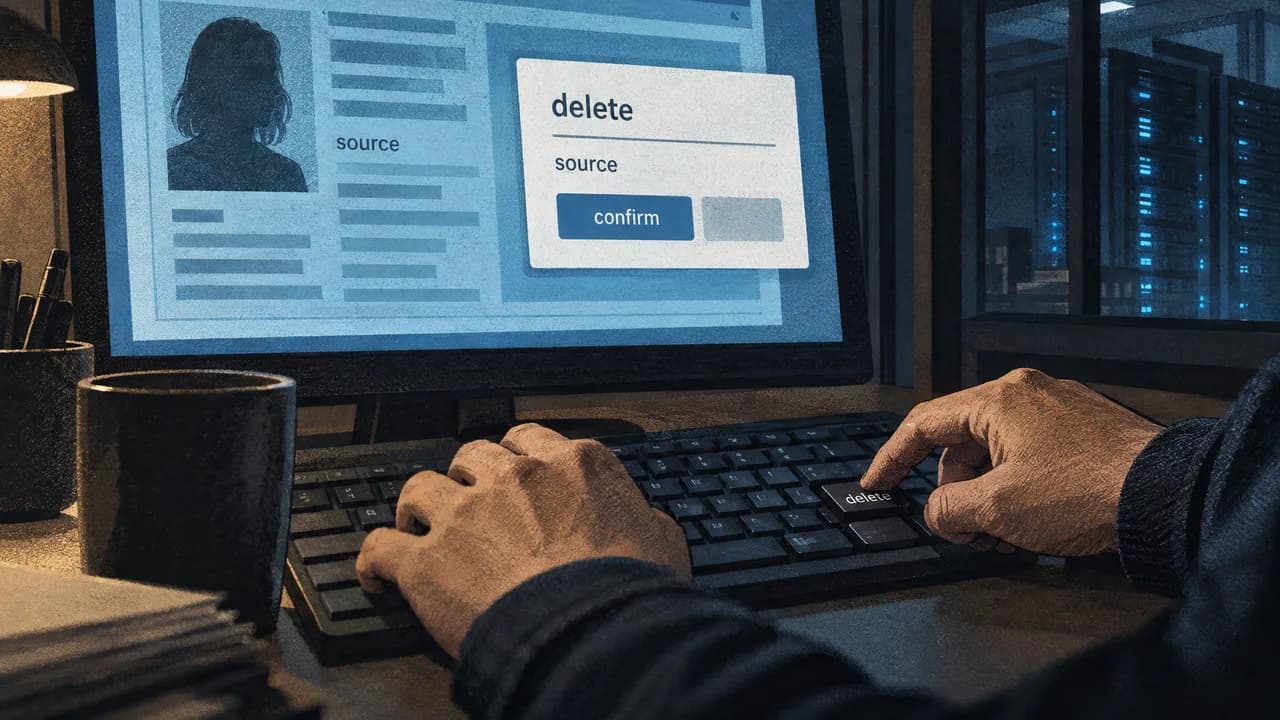
- Pull your number out of circulation. Request removal from the data-broker lists that feed the dialers. This must be repeated, because brokers re-collect on a cycle.
- For anyone with a public profile, treat the wave as intelligence. Check whether your number, addresses, and family details are exposed on broker aggregators and in dark-web leak dumps.
- Maintain the effort. This is a campaign, not a one-time fix. A single sweep gives you weeks of quiet, then the lists refresh.
Steps one and two buy immediate relief. Step three is the structural fix. Steps four and five are what separate a nuisance from a real exposure.
How to judge a spam-blocking or protection service
Most services on the market solve the wrong problem. They filter the symptom, the visible call, while leaving the source intact. Here are the dimensions that matter when you compare options.
- Source removal versus symptom filtering. Does the service remove your data from broker lists repeatedly, or does it maintain a block list that decays as prefixes rotate? The first stops the feed. The second only hides the noise.
- Breadth of coverage. How many brokers does it sweep, and does it monitor dark-web leak dumps for credentials tied to your number? A service that checks ten brokers while a hundred exist is theater.
- Ongoing monitoring versus one-time cleanup. Brokers re-collect continuously. A provider that resurveys quarterly is doing the real job. One that promises a single pass sells relief, not protection.
- Reputation work on top of removal. Suppression and positive content that outranks broker pages matter more than deletion, because deletion never sticks.
- A dedicated human or an automated sweep. An algorithm can submit opt-out forms. It cannot judge whether a spike in spam means your credentials just leaked.
- Total cost across a year, not the entry price. The cheapest tool looks great for a month and useless by the third.
The trade-off is explicit. Cheap filtering apps stop the visible nuisance quickly, but they leave the broker-sold data intact. If your number is monetizable, that data will keep feeding dialers.
Where advice on 754 spam goes wrong
The endlessly reshared list of "five area codes you should never answer" is the most dangerous advice circulating. The codes rotate within months, and the real number shown is spoofed anyway. Blocking 754 tells you nothing about who is calling, because the caller is not actually in Fort Lauderdale. That is the same trap we document for other overlay codes: why blocking a spam prefix doesn't stop spoofed calls.
Another misconception: answering a call puts your number on a list. In most cases, the number was already sold by a data broker before the first ring. Your phone never had privacy to lose, it had exposure you did not notice.
A third error is trusting caller ID as evidence of identity. The FCC's own guidance documents spoofing as routine, yet people still make decisions based on the displayed number. The final failure is the assumption that one block or one removal request ends the problem. Brokers re-collect on a cycle, and the spam returns with them.
When self-service is enough, and when it isn't
The DIY path genuinely suffices for a narrow case. A private individual whose number leaked through a single merchant breach, who can ignore a few nuisance calls a week, and who has no public profile: carrier filtering, registry sign-up, and reporting will manage them.
It does not suffice for anyone whose number is monetizable. Executives, public figures, founders, and operators whose name, address, and family details surface in broker searches face a different reality. For these people, the spam wave is reconnaissance. It confirms a live line and opens the door to targeted phishing, social engineering, and open-source intelligence collection.
The business dimension compounds this. When unwanted contact shifts from nuisance robocalls to coordinated reputation attacks, negative review campaigns, or impersonation, filtering stops helping entirely. We have seen executives realize the calls were the least dangerous part of the campaign.
One honest boundary: no service can make a publicly listed high-profile number unfindable. What a proactive program does is collapse the available attack surface and outrank the leaked data. That is the realistic objective.
How Area 52 stops the spam that blocking can't
Area code 754 spam is the visible edge of a data exposure, and we treat it that way. Our Overwatch executive digital protection removes your data from broker aggregators so the dialers stop being fed, and our suppression work pushes broker listings and unwanted pages down or out of search entirely.
The features that matter here are data broker removal, dark web monitoring, vulnerability scans, content creation, amplification, and positive reviews. The differentiator is structural: every client gets a dedicated Digital Guard, a human who owns the case, rather than an automated sweep. Algorithms submit forms. Humans judge intent.
Because we combine reputation management with cybersecurity, a spike in spam directed at an executive reads to us as a signal to check for leaked credentials, open-source intelligence exposure, and coordinated follow-ups. That is the part self-service misses. The team is led by our founder, a retired CIA Operations Officer with two decades in HUMINT collection, which shapes how we read these campaigns.
Reassessment is continuous, not annual. If you want the specifics of how we approach ongoing suppression, we do not publish prices publicly, so contact us for a scoped engagement. We protect the data we scrub according to our privacy policy, and you will find more guides from the Area 52 blog on the same problems.
Get new articles by email
New articles from Area 52, sent to your inbox.
By subscribing you agree to receive emails from Area 52 about new articles. You can unsubscribe at any time.