Area IT Is an Exposure Surface, Not a Department
Area IT is every system, account, and data broker record that touches an executive's name. Treating it as a one-time audit is the mistake that turns a clean scan into a false sense of safety.

The most expensive mistake an executive makes about area it is assuming it names an org chart. It does not.
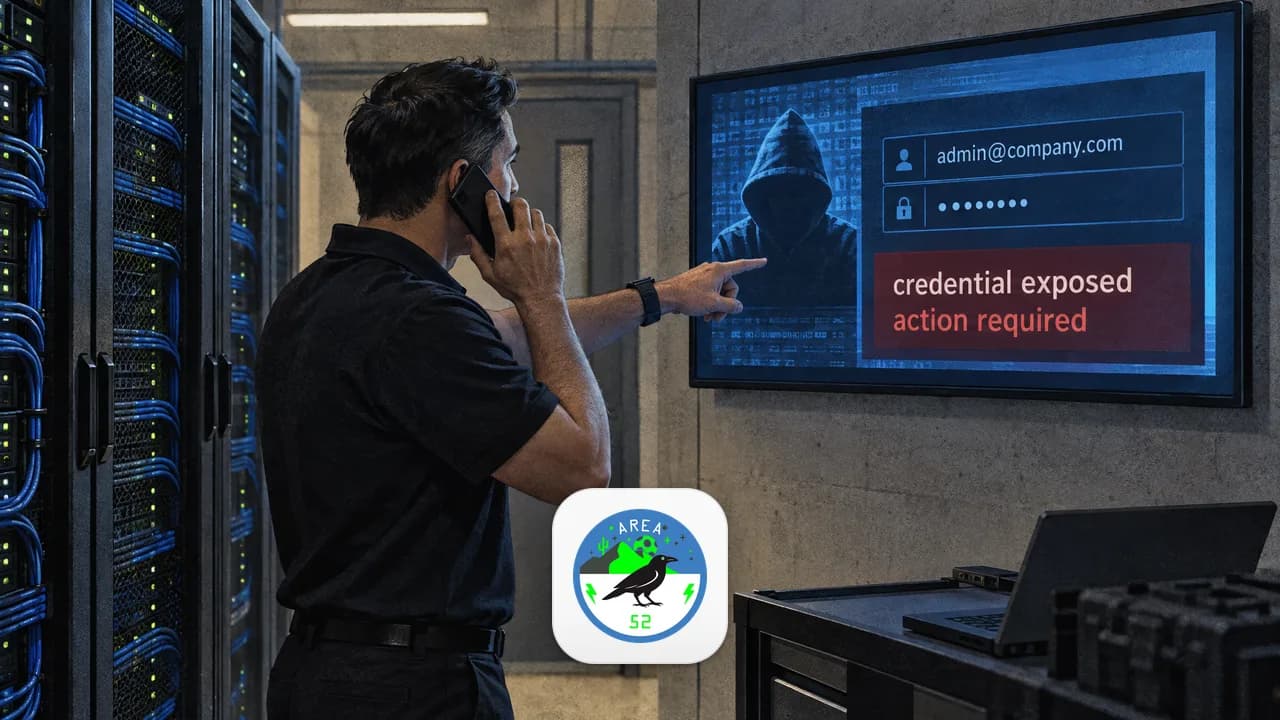
Area it is the full set of systems, accounts, devices, and records through which a named person or firm can be found, contacted, impersonated, or attacked, and it almost never sits under one owner. Corporate identity management covers one slice. Personal devices cover another. Data broker listings, registrar records, and dormant forum accounts cover the rest, and nobody signs for them.
That last fraction is where the damage happens. A single exposure surface scattered across four vendors and two households has no perimeter, because nobody drew one.
What Area IT Actually Means
Search results on this phrase split into two useless camps. One camp explains an IT area inside a company, meaning the division responsible for servers and support tickets. The other points to a specific company that sells its own services under the name, which is noise if you are trying to understand the concept an executive actually gets assessed on.
The definition that matters operationally: an IT area is a bounded zone where systems, access rights, and data handling share the same threat model. In a corporate setting that is a domain, a network segment, or a business unit. Applied to a person, it is everything that authenticates as them.
The distinction decides what gets counted. If you define an area by the department that owns it, personal email never enters the tally. If you define it by what authenticates as the executive, personal email is the first line item, because it is the reset path for almost everything else.
That reframe is the whole argument. Scope by identity, not by ownership, or you spend a budget hardening systems that were never the entry point.
How the Exposure Surface Actually Works
Picture four layers stacked, each one a different type of asset with a different discovery rate.
The corporate layer includes directory accounts, SSO sessions, and the applications behind them. It is the most monitored and the least likely to be the first breach. The personal layer is where the ratio inverts: the free mailbox, the personal cloud storage, the two-factor app tied to a phone number, none of it governed by an IT policy.
The broker layer is the quiet one. Data brokers aggregate public records, purchase histories, and leaked datasets into profiles that carry a name, address history, phone numbers, and relatives. These records are not breaches, so no notification ever fires. They are also the raw material for social engineering, because they are accurate.
The identity-reuse layer connects the first three. Credential dumps from one service are tested against every other service, and success depends on overlap rather than on the sophistication of the attacker.
What makes this a system rather than a checklist is feedback. Every added data source increases the risk that a targeted ad account, a registrar login, or a mailbox that belongs to the executive personal area becomes the pivot point. Meanwhile the broker layer keeps regenerating from public records, so the list you removed from last quarter reconstitutes itself from the same feeds. Treating the discipline as a set of tasks ignores that the pages you already fixed get re-listed by the same aggregation machinery that produced them, which is why the discipline framing outperforms the sector framing.
Why a One-Time Sweep Fails
A quarterly scan produces an artifact, and artifacts feel like progress. What it does not produce is the one thing the surface rewards: continuity.
Re-listing is the structural reason, and it is not a bug in any single vendor. Broker profiles get rebuilt from the same public records that fed them, usually without anyone touching the site you filed a removal against. Suppression buys a period of reduced visibility; it does not buy permanence.
Removal is also not deletion. The record often stays in the aggregator's internal store and stops being surfaced, which means a later re-ingestion can bring it back without any new data entry from you.
Then there is the interpretation problem. A clean report on Tuesday says the surface was quiet on Tuesday. It says nothing about the credential dump that gets tested next week, or the phone number that migrated to a new two-factor provider. Buyers who treat the first scan as an endpoint are paying for reconnaissance and mistaking it for protection.
Running It as a Repeatable Process
The mechanism points to a workflow rather than an audit. The order matters because each stage feeds the next.
- Inventory the identity surface by authenticating entity, not by department, and list every account, device, and phone number tied to the person.
- Rank each asset by pivot value: what a successful compromise of it would unlock downstream, starting with mail and identity provider.
- Reduce the surface before defending it. Close dormant accounts, remove old payment methods, and consolidate identity providers so fewer reset paths exist.
- File broker removals against the highest-risk listings first, and log what was filed and when, because the re-listing clock starts at filing.
- Re-scan on a fixed cadence and diff against the prior baseline instead of reading each run as an isolated snapshot.
- Escalate only the deltas. A surface that grew by two broker listings and one live credential dump is three specific actions, not a new project.
The cadence matters more than the tooling. A monthly diff catches re-listings before they accumulate into a usable profile; an annual audit catches them after.
Where the cadence breaks
Two failure points recur in practice. The first is unauthorized scanning: probing third-party systems to find your own data crosses a line the moment it touches infrastructure you do not control, which is why vulnerability scans belong on assets you own.
The second is the credential side. Personal data breaches that never surface in news coverage are exactly the ones that appear in credential-market dumps, and those dumps are what drive account-takeover attempts later. Monitoring dark web sources is how that layer gets observed rather than guessed at.
The Mistakes That Blow Up the Whole Exercise
Scope by department is the mistake that quietly kills the program before any work starts. The moment personal accounts are excluded from the inventory because they are not on the org chart, the assessment answers ten questions about accreditation and never touches the mailbox that resets everything else.
A subtler error is measuring coverage instead of risk. Teams proudly report that every broker in the list was contacted, without noting that the top three listings sit on sites with the highest search visibility. Coverage is easy to claim; prioritization is the actual work.
Then there is the conflation of a clean scan with a clean state. Nothing in a scan report tells you whether an old password from a discontinued service still opens a support portal. The scan checks listings, not live access.
And the most avoidable one: filing removals without logging the filing date. Without that log there is no baseline, no diff, and no way to tell whether the surface is shrinking or the scanner changed its sources.
What the Evidence on Triage Timing Shows
Academic literature on this problem is thinner than the confident tone of most vendor pages suggests, and the honest position is that almost no field study measures re-listing rates for broker removals over time. What does exist is adjacent work on when an investigation should stop informing and start acting.
The chapter does not measure digital exposure, and it should not be cited as if it does. It is useful because the structure of the problem transfers: at some point the marginal finding stops being actionable and the marginal action starts being what matters.
That is an argument against the audit-then-reassess loop. If the surface regenerates faster than the audit cycle, every additional discovery pass is a delay dressed as diligence.
What this means for your budget
Budget spent on discovery without a removal and re-scan cadence behind it buys the cheapest half of the problem. The expensive half is the part that keeps running: filing, logging, diffing, escalating. A program that cannot answer what changed since last month is not monitoring anything.
How We Approach This
We treat the surface as an ongoing operation rather than a report. Each client gets a dedicated Digital Guard assigned to their case, so the same person sees the same surface month over month and notices the lateral shift a rotating queue would miss. That continuity is the mechanism, not a service nicety: re-listings and credential reappearances only show up as signal when someone holds the prior baseline in view.
We combine reputation work with security work because the two halves of this surface fail together. Suppression and positive content creation address the visibility problem; data broker removal and dark web monitoring address the exposure problem; vulnerability scans and penetration testing address what an attacker would find if they got past the first two. The case for treating this as a discipline rather than a sector is that no single one of those services fixes the surface on its own.
An executive protection posture that relies on one vendor watching one layer is not layered protection; it is a single point of failure with better branding. We run the sweep continuously, we log every removal, and we tell clients what changed since the last cycle. That gap between "clean report" and "clean state" is where real risk lives, and closing it is the whole job.
Related reading
Get new articles by email
New articles from Area 52, sent to your inbox.
By subscribing you agree to receive emails from Area 52 about new articles. You can unsubscribe at any time.