Private Investigator Virginia: License First, Scope in Writing
Hiring a private investigator in Virginia starts with two documents, not two phone calls: a DCJS registration you can verify and a written scope that names deliverables. Everything else is salesmanship.
By the Area 52 team
5 min read
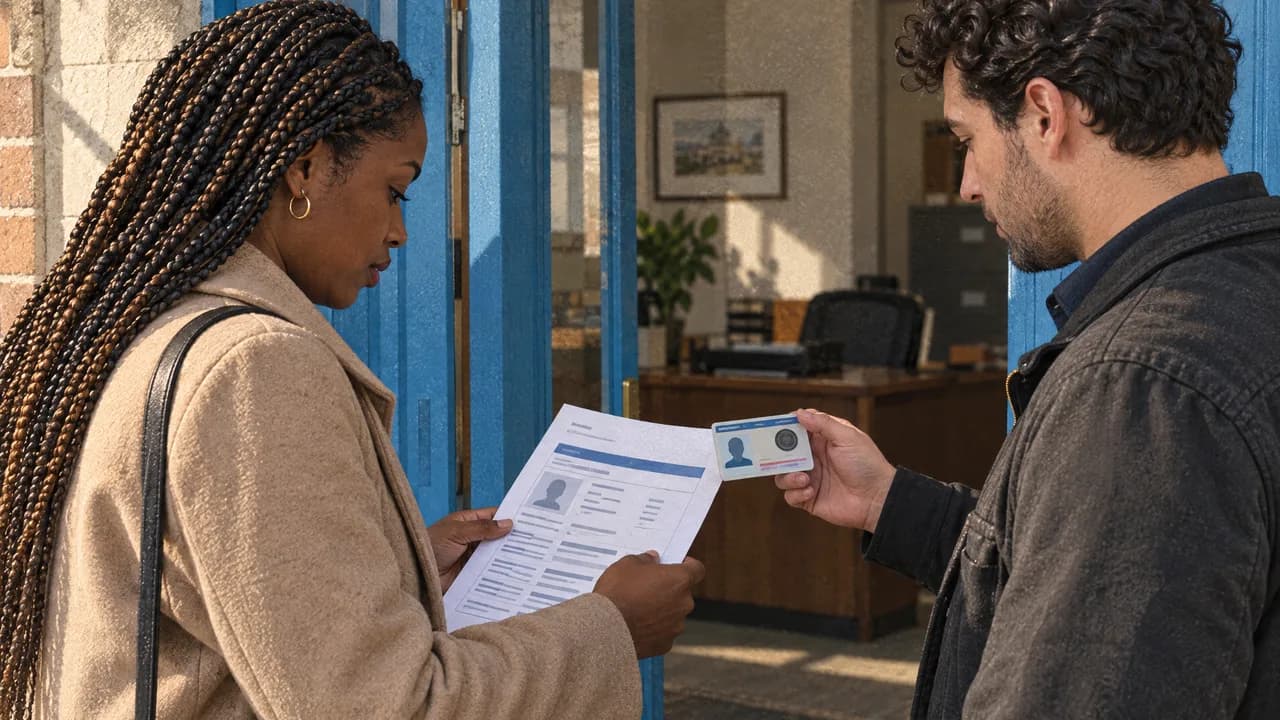
Hiring a private investigator in Virginia starts with verifying a DCJS registration and writing a scope document, not with comparing hourly rates. The license check and the scope memo are the two artifacts that decide whether the engagement is accountable or open-ended, and most buyers treat both as paperwork to finish later.
That inverts the real risk. Virginia screens the people who do this work before it lets them charge for it, and the screen starts with a registration application filed under the state's administrative code (6 Va. Admin. Code § 20-174-40). Buyers rarely pull that record. They should pull it first, before a single invoice exists.
How a Virginia Investigation Actually Runs
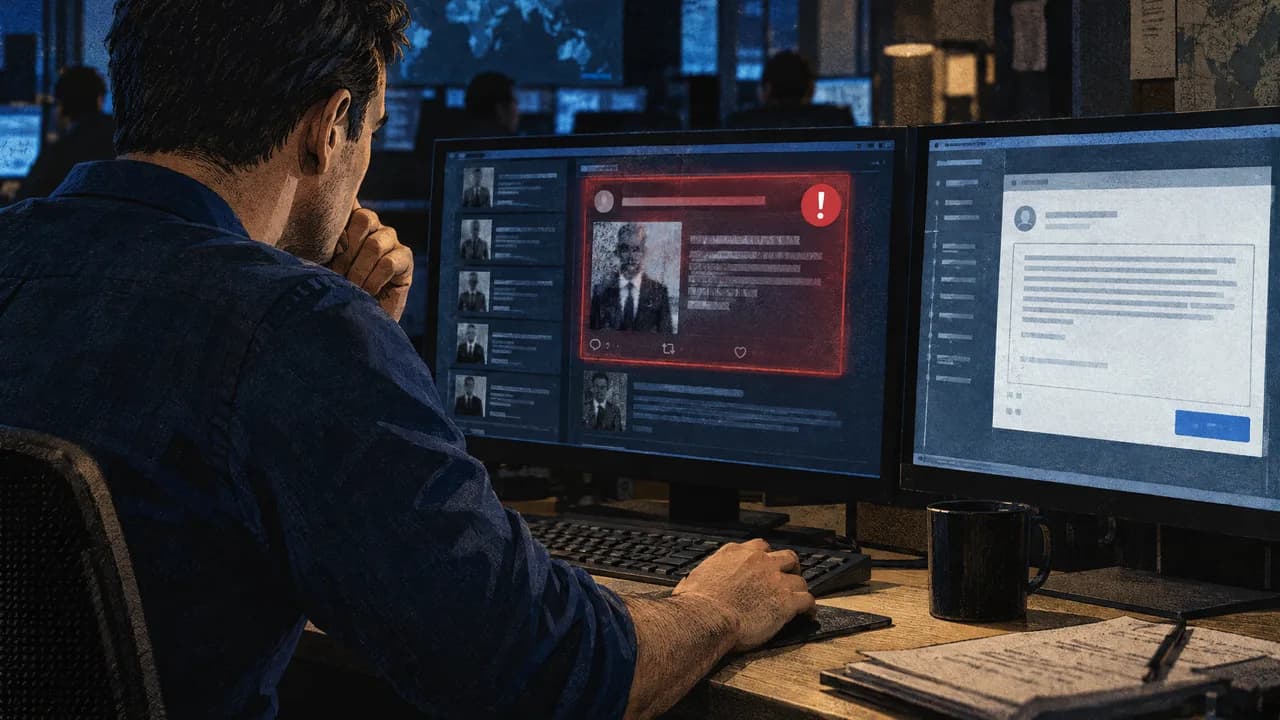
A Virginia investigation is a paper trail with fieldwork attached. The paper trail opens with a complaint or a question, gets scoped into tasks, and each task closes with a deliverable: a records pull, an interview memo, a surveillance report with timestamps, a chain of custody for anything that could end up in a courtroom.
The fieldwork sits underneath that structure. Surveillance requires a date, a location, and a stopping condition. Records work requires a jurisdiction and a specific document type. Interviews require a witness list and a stated purpose, because a witness who senses a fishing expedition stops cooperating.
The part buyers miss is the cost mechanics. Hourly billing rewards duration, so an investigation with no defined endpoint expands into whatever time the budget allows. A flat-fee scoped project puts that risk on the firm. Neither arrangement is automatically better, but you have to pick one deliberately.
The Sequence That Keeps the Engagement Accountable
- Pull the investigator's DCJS registration and confirm the name on the registration matches the person or firm you're paying.
- Write a one-page scope that names the question being answered, the deliverables, the reporting cadence, and what ends the engagement.
- Agree the billing model in writing, hourly with a cap or flat fee per deliverable, and state what happens when the cap is reached.
- Require a dated, sourced report for every deliverable, with the underlying records or observations attached rather than summarized away.
- Review the first deliverable before authorizing the next tranche of work, so an unproductive theory dies early instead of at month three.
- Close with a written retainer of what was found, what was not found, and which files were returned or destroyed.
Steps four and five are where most engagements go wrong. An investigator who reports "nothing significant" without the underlying source material has given you an opinion, not work product.
What to Look For Before You Sign Anything
- Registration status. The DCJS record is public. A firm that resists giving you the registration number for a lookup is telling you something.
- Scope discipline. Ask what the firm would decline to do. Investigators who accept every task uncritically are billing you for their learning curve.
- Deliverable format. Insist on seeing a sample report. Timestamps, sources, and a stated limitations section are the marks of a defensible file.
- Rate structure. Rates in Northern Virginia typically run $75-$150 an hour for surveillance, $100-$200 for complex investigations, and $200-$400+ for federal-contractor or executive-protection-adjacent work (StartBusinessByState). A figure far under the band usually means an untrained subcontractor; far over it means you're paying for overhead you may not need.
- Data-handling terms. Ask where the file lives after the engagement ends and who can access it. Your exposure does not stop when the invoice is paid, which is why the boundaries of privacy laws matter to an investigation file as much as to a breach.
About Area 52
We're not a traditional investigation shop, and that's a deliberate choice. Where an investigator documents a threat after it materializes, our work is to make the executive harder to target in the first place. We run dark web monitoring, vulnerability scans, and OSINT collection, and our data broker removal suppresses personal information from broker records before it becomes a map of where an executive lives and eats.
That overlaps with investigation work rather than replacing it. When the question is a legal one, a formal finding, or a courtroom-ready record, you want a licensed Virginia investigator with a registration number and a discovery-ready file. When the question is what your own exposure looks like across open sources and broker records, that's us.
The two combine well, and the personal information under the US privacy laws distinction explains why: a right to request removal is not the same as a record kept off the open web. Reach us at greyman@a52.io, +15712102227, or 1350 Beverly Road, STE 115, PMB 175, McLean, Virginia 22101.
Frequently Asked Questions
How much does a private investigator cost in Virginia?
Expect roughly $75-$150 an hour for surveillance work, $100-$200 for complex investigations, and $200-$400+ for federal-contractor or executive-protection-adjacent engagements in Northern Virginia, with the spread tracking scope more than skill. Flat-fee scoped projects exist and shift the overrun risk to the firm. Ask for the billing model in writing before work starts, and ask what happens when an hourly cap is reached.
Is it legal to hire a private investigator in Virginia?
Yes. Virginia regulates private investigators through DCJS registration, so the lawful path is to confirm the registration and hire a registered firm. Hiring an unregistered operator does not transfer the legal risk to them; it lands on you. The registration record is public, and pulling it takes minutes.
Is it worth it to hire a private investigator?
It's worth it when the question you need answered has a defined endpoint and the answer changes a decision: a custody dispute, a fraud claim, a missing person, a pre-litigation record. It's not worth it when the goal is reassurance. An engagement without a stopping condition bills until the budget runs out, and then you have a file you can't act on.
What is a private investigator not allowed to do?
A Virginia registration is not a law enforcement badge. Investigators cannot impersonate police, and the registration does not authorize wiretapping, trespass, or pretext access to financial accounts. A firm that implies otherwise is selling capabilities it doesn't have, and you'd be the one holding the liability when the theory collapses. Ask directly, in writing, what the firm will not do.
Sources
- StartBusinessByState.com
Pricing benchmarks: Virginia PI hourly rates typically run $75-$150 for surveillance work, $100-$200 for complex investigations, and $200-$400+ for federal-contractor or executive-protection-adjacent work in NoVA.
- law.cornell.edu
Code § 20-174-40 - Initial registration application.
Sources checked on October 29, 2026.
Get new articles by email
New articles from Area 52, sent to your inbox.
By subscribing you agree to receive emails from Area 52 about new articles. You can unsubscribe at any time.