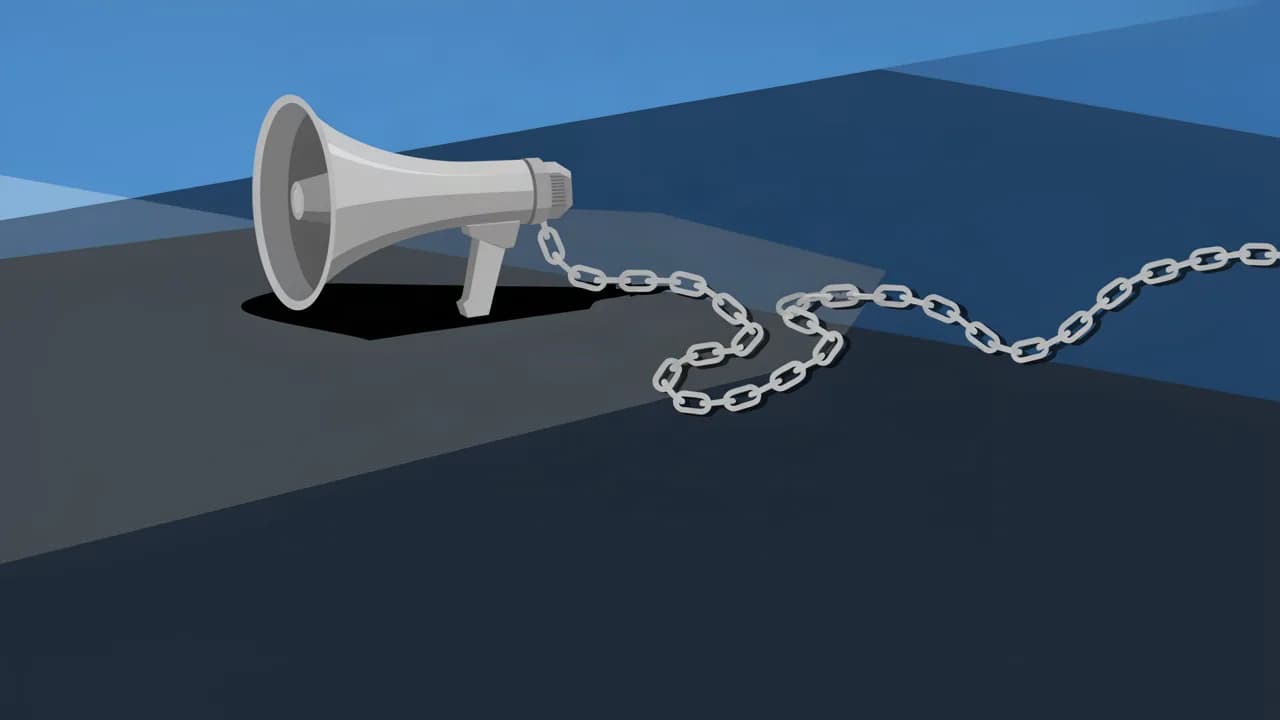
Reputation Protection Against Smear Campaigns Starts Before the First Post
Reputation protection against smear campaigns is not a cleanup job you start after the damage; it is a response capability you assemble before the first post goes live.

Reputation protection against smear campaigns is a pre-built response capability: detection, takedown, suppression, and legal timing, assembled and rehearsed before the first hostile post publishes. The part most executives get wrong is sequencing. They treat the campaign as a content problem and start writing rebuttals, when the mechanism that makes a smear campaign dangerous is volume plus search persistence, and both of those respond to infrastructure removal, not argument.
The Machine Behind a Coordinated Smear
A smear campaign is not a rumor. It is a distribution system with four moving parts, and each one is separable from the others. Remove one and the rest lose efficiency.
The seed is the first publication: a forum thread, a substack, a Google review cluster, a Medium post with an author photo that belongs to someone else. The seed matters less for what it says than for where it sits, because it becomes the citation anchor every later post links back to.
The amplifier layer is what turns one post into two hundred. Coordinated accounts, bot networks, engagement pods, and sometimes paid placement on sites that accept guest content without editorial review. Amplification is cheap. A campaign that would have cost a public relations budget a decade ago now runs on a few hundred dollars and a weekend.
The persistence layer is search. A hostile page that ranks for your name on page one does more damage than a thousand posts nobody finds. This layer is also the most fragile, because it depends on indexation, and indexation depends on signals you can influence.
The citation layer is where the campaign tries to escape the internet. A reporter, a regulator, or a board member who repeats the claim converts it from a post into a fact with a source. That conversion is the actual objective in most campaigns against executives, and it is the one you have the least time to prevent.
We run data broker removal, dark web monitoring, vulnerability scans, penetration testing, OSINT, and private investigations as one engagement rather than separate subscriptions, because a campaign touches all four layers at once and the response has to move across them in the same day. Broker sweeps remove stale personal records that give an attacker raw material. OSINT and private investigations identify who is seeding. Suppression and positive content creation move ranking and indexation rather than delete a post, which is a different mechanism from making something disappear.
Why Volume Beats Precision, and Why That Breaks Most Defenses
The structural reason most defenses fail is that they are built for a single incident and a smear campaign is a high-volume, low-cost, distributed one.
Monitoring that watches a brand name misses the seeding. Campaigns typically start in places a brand alert never indexes: niche forums, private Discords, comment sections on unrelated publications, review sites for a company you do not own. By the time the phrase reaches a monitoring tool, the amplification layer is already running. Passive monitoring on social media produces alerts after the seeding window has closed, which is why a detection layer has to cover named individuals, family members, and associated entities rather than a company handle.
Incident response built around a single PR crisis fails because the campaign is designed to consume your response budget. Every denial you publish is a new asset for the attacker to screenshot, quote, and cite. This is the mechanism behind how to cope with a smear campaign that most guides skip: the goal is not to win the argument in public, it is to make the argument stop producing searchable artifacts.
Removal requests are slow relative to posting. Platform review queues process a takedown in days or weeks; the attacker reposts in minutes. That asymmetry is real and it does not go away. What changes the math is attacking the layers that are slow for the attacker too: the hosting provider, the ad network funding the page, the payment processor, and the broker records the campaign used to build its claims in the first place.
Legal leverage exists, but it is not a switch. A prima facie defamation claim generally requires a false statement of fact, publication to a third party, fault, and reputational harm, but the precise requirements vary by jurisdiction, per Cornell Law School's Legal Information Institute. The practical implication is that your first legal question is not "do we have a case" but "which jurisdiction gives us the fastest lever," and that question has to be answered before the campaign peaks, not during it.
Building the Response Before You Need It
The work is sequential, and each step produces the input the next one needs.
- Inventory every asset a campaign could attack: your name variants, your spouse's and adult children's names, your holding entities, your registered addresses, and any domain that resolves to a site about you. Most executives are surprised by the third and fourth categories.
- Pull the baseline ranking for each name across search engines and AI assistants, and save it with a timestamp. Without a before-picture, you cannot prove movement later, and you cannot triage which hostile result actually matters.
- Map the broker and data exposure that supplies a campaign its raw material: old court records, property filings, voter registration, marketing lists, and breached credential dumps.
- Write the takedown templates in advance for each venue you are likely to face: search engine deindexation, platform community standards, hosting provider abuse desk, and domain registrar. Each has a different evidentiary bar and a different response time.
- Name the decision-maker and the legal reviewer before the incident. A campaign that requires a board meeting to authorize a response has already lost a week.
- Rehearse once. A tabletop exercise on a fabricated post reveals which of your assumptions about internal approval and external vendors is wrong.
The buyer's guide to choosing a protection firm matters here more than any tool comparison, because the failure mode is almost never the software. It is a vendor that monitors well and has nobody authorized to act on what it finds.
Where Executives Waste the First Forty-Eight Hours
Publishing a rebuttal is the reflex, and it usually helps the attacker. Rebuttals create a second searchable document containing the claim, give the campaign a quotable response, and signal that the target is engaged. Unless the post has already reached mainstream press or a regulator, the correct move is to say nothing in public and act in private.
Engaging the anonymous accounts is the second cost. Replying to bot networks confirms the account is being read, which is the only feedback signal a low-budget operator needs. It also produces a thread that ranks for your name.
Buying a data broker removal sweep and calling it reputation protection is a category error. Broker removal is a necessary input, and it is ongoing rather than a one-time task. It is not a suppression mechanism, and it does nothing about a hostile page that already ranks. Executives who conflate the two often discover the gap when a page they thought was handled resurfaces unchanged.
Waiting for a legal opinion before doing anything operational burns the response window. The operational work (documentation, preservation, venue mapping, broker sweeps) is legally neutral. It can start in hour one while counsel evaluates the jurisdiction question, and it usually has to, because platform review queues are the slowest link in the chain.
Anchoring the budget to a headline number instead of the deliverables is the last mistake. What an executive protection quote really covers varies enormously by scope, and a quote that looks cheap often excludes the suppression and content work that actually moves rankings. Read the scope line, not the total.
What the Record Actually Establishes
The hard numbers in reputation defense are thinner than the marketing suggests, and the useful ones are legal and procedural rather than statistical.
Defamation doctrine gives you a defined test rather than a probability. The four elements above are the floor, and jurisdiction is the variable that decides whether a claim is viable at all, as Cornell Law School's Legal Information Institute sets out. Treat that as the checklist your counsel runs in the first hours, not as a promise of outcome.
In England and Wales, the Defamation Act 2013 reshaped the threshold a claimant has to clear, which is why jurisdiction determines whether a letter is a real threat or noise, as the UK government guidance on the Act describes. The same set of facts can be a viable claim in one country and an expensive dead end in another.
Practical performance data on campaigns is where the market is least honest. Vendors quote suppression timelines and removal rates without publishing the sampling method, the venue mix, or the definition of removal used. When a proposal gives you a percentage with no methodology, treat the number as decoration and ask instead for the venues covered, the escalation path when a takedown is refused, and who is accountable if the page is still ranking in ninety days.
How We Run This Engagement
We treat reputation protection against smear campaigns and the security work as one engagement, because the attacker uses one playbook. Dark web monitoring and vulnerability scans tell us where credentials and personal records leaked. Data broker removal cuts off the raw material. Suppression and positive content creation move what search engines and AI assistants surface for your name. OSINT and private investigations run attribution on the amplifier layer. Penetration testing covers the technical intrusion that sometimes accompanies a campaign.
A Dedicated Digital Guard is assigned per client, which is the piece that keeps a campaign from stalling between vendors. When a hostile page appears at 11 p.m. on a Friday, there is one named operator who already knows your asset inventory, your legal reviewer, and your approval threshold.
If your need is a single removal request against one page, or you want a self-service monitoring subscription and nothing else, an enterprise engagement is more than you need and we will tell you so. Where our model fits is the executive or organization facing a sustained, coordinated campaign, or one that intends to be ready for one.
Reach us at greyman@a52.io, +15712102227, or 1350 Beverly Road, STE 115, PMB 175, McLean, Virginia 22101, and we will start with the baseline rather than the pitch.
Frequently Asked Questions
How to defend yourself against a smear campaign?
Build the response before the campaign starts, then execute in private. That means a documented asset inventory, a saved baseline of what search engines and AI assistants return for your name, pre-written takedown templates for each venue, and a named decision-maker who can authorize action without a meeting. During a live campaign, resist publishing a rebuttal unless the claim has already reached press or a regulator. Work the layers the attacker relies on: hosting, funding, indexation, and the personal data that supplies the raw material. Public argument feeds the campaign; private infrastructure removal starves it.
Can you take legal action against a smear campaign?
Often, but the strength of that action depends almost entirely on jurisdiction and on whether the statements assert facts rather than opinions. A viable defamation claim generally needs a false statement of fact, publication to a third party, fault, and reputational harm, with the precise requirements varying by location, as Cornell's Legal Information Institute describes. Legal action runs in parallel with operational work rather than replacing it. Counsel evaluates the claim while the takedown, suppression, and documentation work proceeds, since platform and search timelines will not wait for a legal opinion.
Are political smear campaigns illegal?
Not as a category. A campaign is illegal only where a specific act within it crosses a legal line: a provably false statement of fact about a person, coordinated inauthentic behavior that violates a platform's terms, harassment, or the use of stolen data. Coordinated political messaging that stays within opinion and rhetoric is protected in most jurisdictions. The practical consequence is that you rarely sue a campaign as a whole. You identify the specific acts that are actionable and pursue those, while handling the rest through platform policy, hosting abuse channels, and search suppression.
Is a smear campaign defamation?
Only where its claims meet the legal test and fall outside protection for opinion. A smear campaign is a distribution method; defamation is a legal cause of action, and the two overlap without being identical. A campaign full of insults, hyperbole, and opinion may cause real damage while remaining non-actionable. A single false factual assertion, published to a third party, may be defamation even without any coordinated campaign behind it. In England and Wales, the Defamation Act 2013 changed the threshold a claimant must clear, as UK government guidance sets out, which is one reason jurisdiction decides whether the label applies at all.
Sources
Sources checked on October 8, 2026.
Get new articles by email
New articles from Area 52, sent to your inbox.
By subscribing you agree to receive emails from Area 52 about new articles. You can unsubscribe at any time.