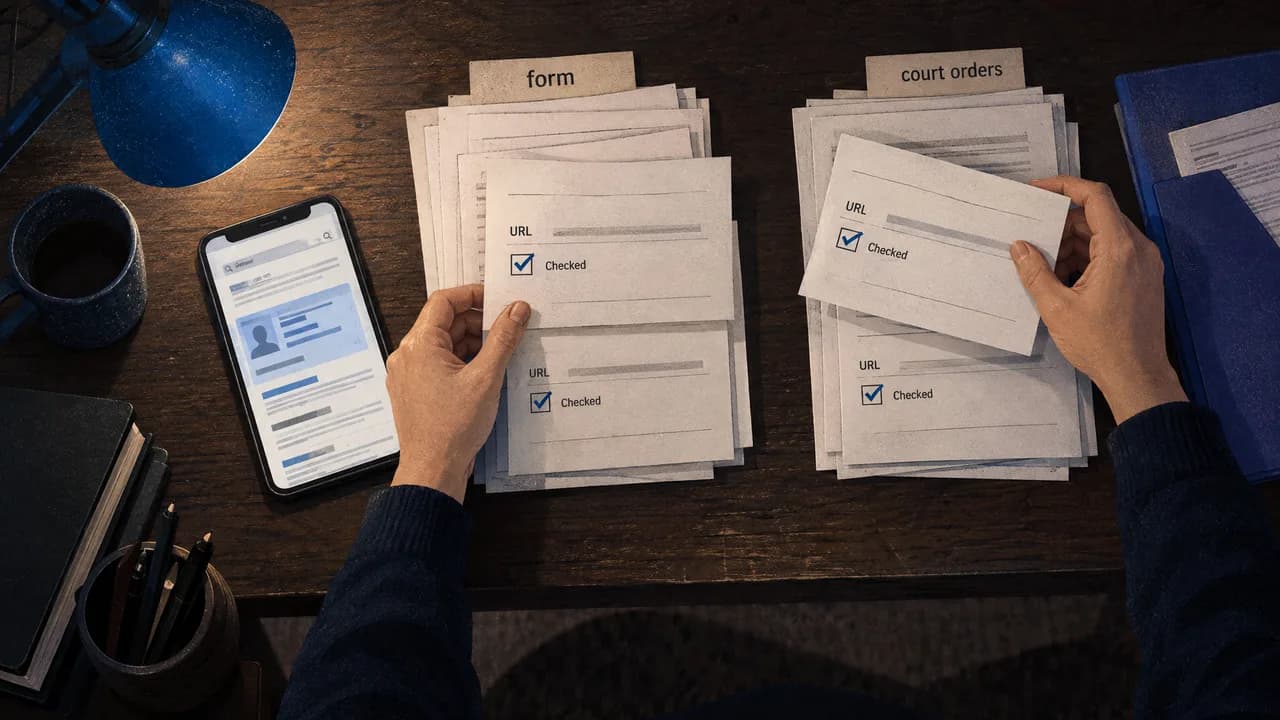
Remove Personal Information From Whitepages Before the Record Becomes a Map
Whitepages suppression is free, fast, and perishable. Here is the opt-out sequence that works, and why a single completed removal leaves most of your exposure standing.
By the Area 52 team
6 min read

Whitepages opt out in 2026: submit the free suppression request, confirm by phone, and re-check in 24 to 48 hours to remove your listing. The part most guides leave out is what happens after that confirmation. A suppressed listing is a snapshot, and the graph behind it keeps pulling fresh records, so the removal you finish this week is not the removal you own next quarter. ➀
The Opt-Out Is a Request, Not a Right
A Whitepages removal is a suppression of a public-facing listing, not a legal deletion of the underlying record. The company still holds the data. It stops showing your address, phone number, and relatives on the page a stranger can pull up in thirty seconds. That distinction decides everything that follows, from how long the removal holds to what a determined searcher can reconstruct from other sites.
People search sites differ from each other in exactly one place that matters to you: how far they let you go. The FTC notes that people search sites will let you opt out of sharing certain types of information, like your address or phone number, but not other information, like sex offender status (Consumer Advice). Whitepages sits on the generous end for the address-and-phone fields. That is the useful part of the request, and it is also the limited one.
The request is worth filing regardless of how you think about privacy. A home address that does not appear on page one of a name search removes a cheap first move from anyone scouting you: the process server, the reporter, the salesperson who wants to know whether you own your house.
Why a Whitepages Record Comes Back
The site's own index describes an identity graph built on 28+ years of data expertise linking identities to phone numbers, addresses, and property records (Whitepages). That sentence is the whole explanation. The listing you suppress is an output of a matching engine fed by public records, and public records do not stop moving when you file a form.
A suppression removes the current output. When a county recorder posts a deed transfer, when a voter file refreshes, when a new utility connection lands in a database that feeds the graph, the engine can match your name to a new address and publish a new listing. The old record stays suppressed. The new one starts as a blank page. This is why a removal that worked in March shows nothing in June and a fresh profile in September, and why executives who treat it as a one-time task are cleaning one shelf in a store that restocks every night.
Scale explains why this is not a Whitepages-specific quirk. A recurring mechanism exists because a one-time mechanism does not hold.
The Sequence That Clears a Listing
Filing a Whitepages opt-out takes minutes if you do it in the right order. The order is what most people get wrong: they submit, assume it worked, and never look again.
- Open the Whitepages listing that shows your name, and copy its exact URL from the address bar.
- Submit the free suppression request through the site's opt-out form, using the email address you actually monitor.
- Open the confirmation email and click the verification link, because the request does nothing until that link is clicked.
- Answer the verification phone call, since phone confirmation is a required step and a submitted form that never picks up the phone sits unprocessed.
Step four is where the free path quietly fails for a lot of people. The call comes from an unfamiliar number, and an executive screening unknown calls lets it ring. The form is submitted. Nothing changes. Weeks later the listing is still there and the owner is certain they removed it.
If your name also surfaces on search engines through cached snippets, the request that survives review follows a different standard than a broker opt-out, and the free Google removal route is worth pursuing in parallel rather than after.
Where Do-It-Yourself Removals Break Down
Treating the confirmation as the finish line is the mistake people make most often. The email says the record is suppressed and that reads like a permanent outcome. It is a status, not a guarantee, and the status lapses the moment a new feed matches your name.
Skipping call verification is the one that wastes the most effort. A submitted form with no confirmed call is a request in name only. If you screen unknown numbers as a rule, add the Whitepages line to your contacts before you file, or route the confirmation through a number you will answer.
Filing across every broker as if each were identical is another quiet failure. Each site has its own form, its own verification method, and its own delay before a record drops. What those removal tools actually delete differs site by site, and a process that works on one broker can evaporate on another. Think in terms of a coverage list you maintain, not a chore you finish.
Leaving the family in place is the fourth. The spouse's name, a shared old address, and a grown child who still shows the family home in a phone-book-era record all link back to your household. Suppressing your own record while your spouse's page lists the same street address removes half the exposure and none of the map.
Knowing When a Listing Becomes a Liability
You have three real paths, and they sort by exposure rather than by budget. The first is a single Whitepages opt-out, done once, for the person whose name rarely appears anywhere else. The second is a personal quarterly sweep across the brokers that carry your name, run yourself with a maintained list. The third is a managed engagement that keeps the list current across brokers and sources, which is what comes off Google Search and what returns argues for once your name is on enough lists to matter.
Signals that settle it are concrete. A public-facing role, a board seat, a pending transaction, or a litigation posture all raise the cost of an accurate home address sitting online. A protected address program, a restraining order, or a recent threat raises it beyond what a quarterly checklist can hold. A name that appears in only one directory and nowhere else can wait.
Area 52 runs this as recurring work rather than a single filing: a dedicated Digital Guard assigned per client, data broker removal and suppression, and dark web monitoring that catches the credential leaks feeding these lookups. If your name crosses enough broker pages to be worth a maintained list, reach us at greyman@a52.io or +15712102227.
Frequently Asked Questions
How do I get my personal info off Whitepages?
Open the listing, submit the free suppression request through the site's opt-out form, click the verification link in the confirmation email, and answer the verification phone call. Search your name, your old addresses, and your phone number 24 to 48 hours later to confirm it is gone. A request with no confirmed call does not process, so answer the phone even if the number is unfamiliar.
Why is my personal info on Whitepages?
The listing is assembled from public records: property records, voter files, phone directories, and other public sources that link a name to an address and a phone number. The site's index describes an identity graph built on 28+ years of that data-linking work. You did not sign up for it. A record assembled from public sources gets republished whenever those sources update.
How can I delete my Whitepages account?
There is no account to delete, because browsing and searching Whitepages do not require one. What you remove is the public listing attached to your name, which runs through the same suppression request described above. If you set up a paid subscription at some point, cancel that subscription separately and confirm the listing suppression in its own right.
Sources
- ➀ crabclear.com
Whitepages opt out in 2026: submit the free suppression request, confirm by phone, and re-check in 24 to 48 hours to remove your listing.
- Consumer Advice
People search sites will let you opt out of sharing certain types of information, like your address or phone number, but not other information, like sex offender status.
- whitepages.com
Sources checked on October 27, 2026.
Get new articles by email
New articles from Area 52, sent to your inbox.
By subscribing you agree to receive emails from Area 52 about new articles. You can unsubscribe at any time.