850 area code location: The Florida Panhandle Number, Read Right
You will be able to sort a suspicious Panhandle number from a real one, and you will have the lookup habit that works on any prefix.
By the Area 52 team
5 min read
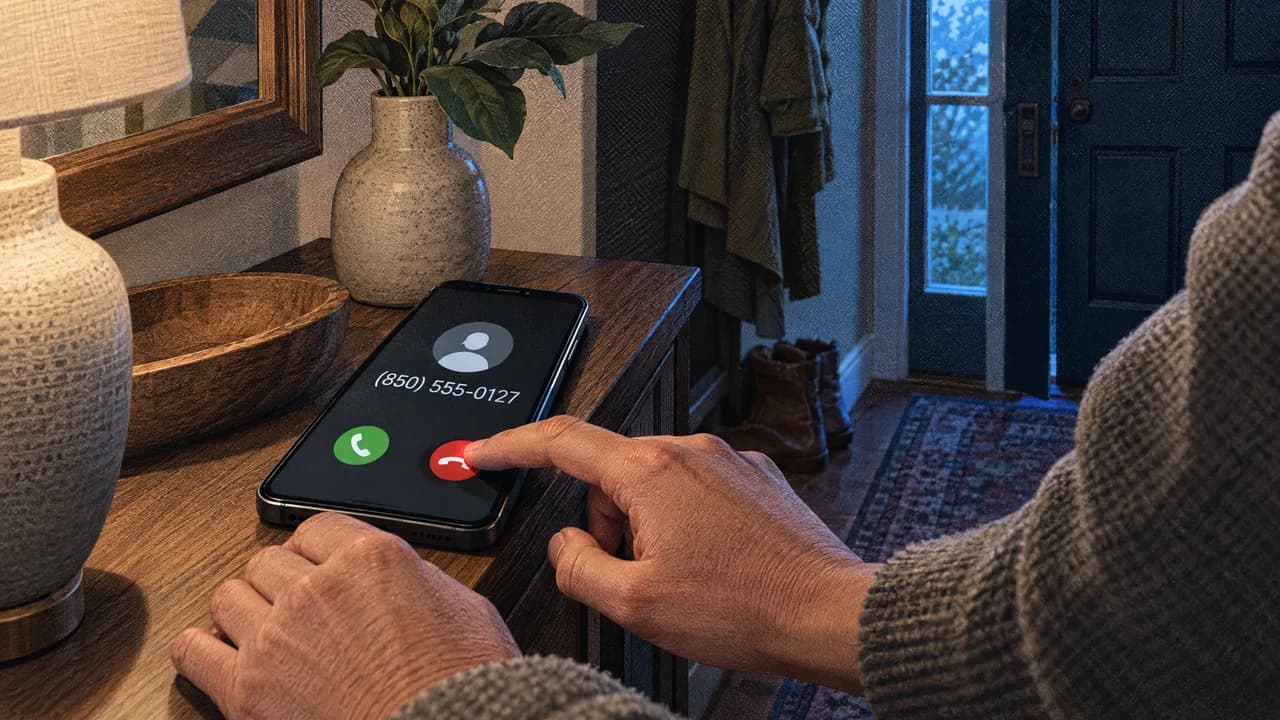
The 850 area code location marks the Florida Panhandle, the stretch from Pensacola through Tallahassee and down to Panama City, and that geography is the only thing the prefix certifies. Where the digits come from and who is holding the phone are two different questions, and the search results answering "850 area code location" collapse them into one. That collapse is where people get burned. A prefix tells you a region, never a person, and treating it as an identity check is how a spoofed call gets answered.
The Search Box Format That Actually Answers the Question
A number lookup runs on one plain pattern, and the pattern is the same whether you are checking an 850 caller or a 434 area code location far north of the Panhandle:
[area code] + [city or exchange] -> lookup query
850 Pensacola
The area code narrows you to a region. The city or exchange narrows you to a rate center inside it. Together they tell you whether the number on your screen plausibly belongs where the caller claims to be, which is the whole point of running the check. Nothing in that query returns a name, and no honest lookup tool will promise one. If a service sells you a name off a three-digit prefix alone, it is selling you a guess with a receipt stapled on.
A worked example: a call shows 850, and the script says the caller is a Tallahassee utility office. Run the query, confirm 850 sits in that region, then ask the only question that matters next. Did the caller's story require you to act before you could verify anything? That urgency, not the prefix, is the tell. We wrote about the same dynamic in why one spam prefix is a symptom rather than the source of the problem.
Run the Lookup Without Fooling Yourself
Order matters here. Run these in sequence, because each step decides whether the next one is worth your time.
- Pull the full displayed number, not just the first three digits, and note the exchange as well.
- Query the prefix and city to confirm the region the digits claim.
- Compare that region against the identity the caller asserted and the request they made.
- Check whether the same number appears across unrelated messages or calls in your history.
- Decide to answer, block, or escalate based on the mismatch, never on the digits alone.
The first step catches more fraud than the rest combined. Scam operations rotate prefixes precisely because they know people fixate on the first three digits and stop reading. A dialer that spoofs an 850 caller ID today can show a 478 area code location tomorrow, and the same operator sits behind both. What stays constant is the behavior: pressure, a deadline, a request for information you would not hand a stranger. Pull the full number, then judge the story.
When Tracing Beats Blocking, and When It Does Not
Blocking a prefix is the right move in exactly one situation: the calls from that prefix are uniform, unsolicited, and you have no legitimate contacts inside the region.
The moment you have genuine business in the region, the calculus flips. Executives with a supplier, a counsel, or a family connection on the Panhandle cannot afford to blind a whole code. Blocking is also a losing game against rotation, because the dialer simply changes the first three digits and tries again next week. That is what we argued in blocking a spoofed prefix: you are treating a display, not a source.
So sort by volume. A sporadic odd number gets screened individually. A steady stream with no legitimate ties gets the prefix block. A stream that arrives because someone already has your number on a list is neither, and no setting on your phone fixes it.
Where Area 52 Takes the Search Off Your Desk
This is the part most people skip. The dialer is not dialing at random; it is working from a list, and your number is on it because it was exposed somewhere. Blocking is a filter on the display. Exposure is the underlying asset attackers are trading, and it does not care which prefix they spoof next.
We built Area 52 around that distinction. We run data broker removal and dark web monitoring for exactly this reason: the number is a symptom, and the exposed record is the source. A Dedicated Digital Guard then owns the file, so removal and monitoring do not fall back to you. Where suppression is the job, our suppression service works the source rather than the search page. It sits alongside our penetration testing, vulnerability scans, and OSINT work, because a number leaking to dialers and a credential leaking to a forum are the same problem wearing different clothes.
Reach us at greyman@a52.io, 571-210-2227, or 1350 Beverly Road, STE 115, PMB 175, McLean, Virginia 22101.
Frequently Asked Questions
Is 850 a legitimate area code?
Yes. 850 is a real North American Numbering Plan code assigned to Florida's Panhandle, covering cities including Pensacola, Tallahassee, and Panama City. Its legitimacy is not the issue. A scam caller can display a real code just as easily as a fake one, so the honest test is never whether the code exists. It is whether the caller's story, timing, and request hold up after you check the number against the region it claims.
Does a lookup tell me who is calling?
No, and any tool claiming to name a caller from the prefix alone is guessing. A lookup answers geography: which region the digits belong to. Matching a name to a number reliably takes more than a database query, which is why a scripted caller can borrow a legitimate Panhandle prefix without ever touching a Panhandle phone line. Judge the request, not the label on the screen.
Should I block every 850 number?
Only if you have no legitimate contacts there and the calls are uniformly unsolicited. If you have a supplier, a client, or family in the Panhandle, a blanket prefix block will silence real calls alongside the junk. Screen the individual numbers instead, and treat a steady stream of spoofed calls as a sign that your number is circulating on a list rather than a reason to cut off a region.
Get new articles by email
New articles from Area 52, sent to your inbox.
By subscribing you agree to receive emails from Area 52 about new articles. You can unsubscribe at any time.