Choose Vulnerability Scanning Software by What Happens After the Scan
Decide whether a free scanner, a paid platform or managed coverage fits your exposure, and set up the rank, assign and rescan loop that turns scan output into closed holes.
By the Area 52 team
8 min read
Updated
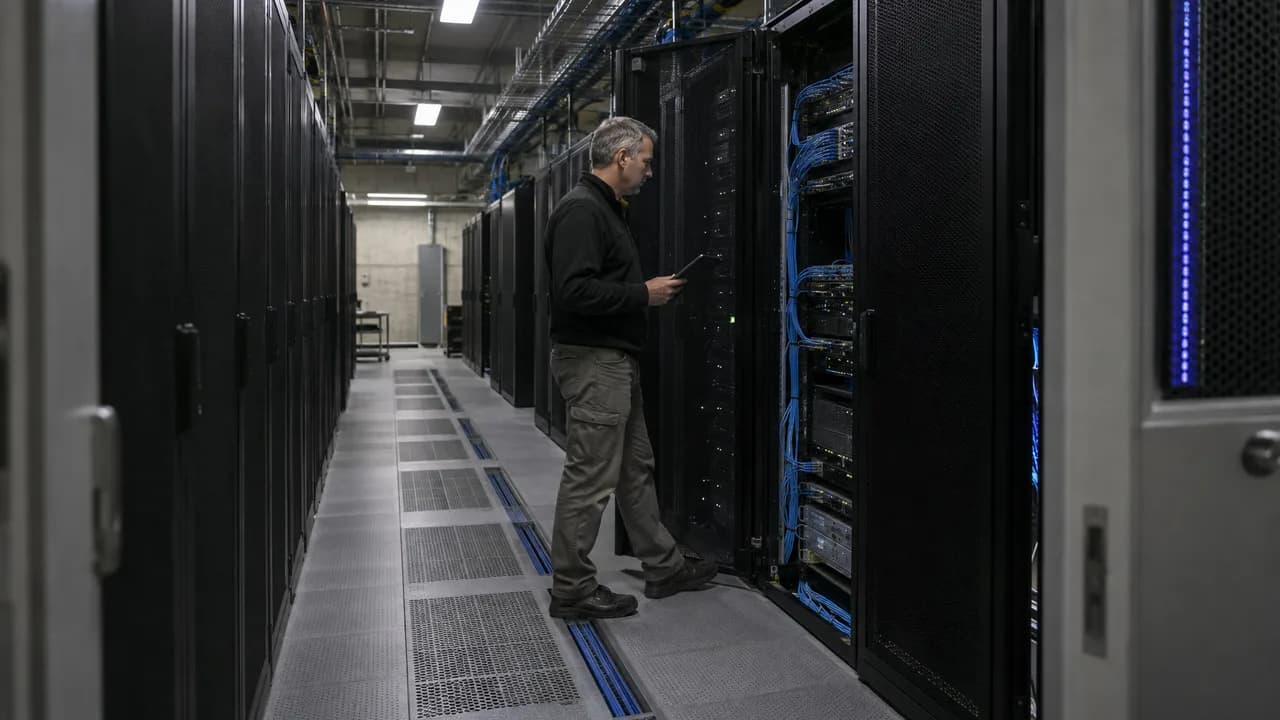
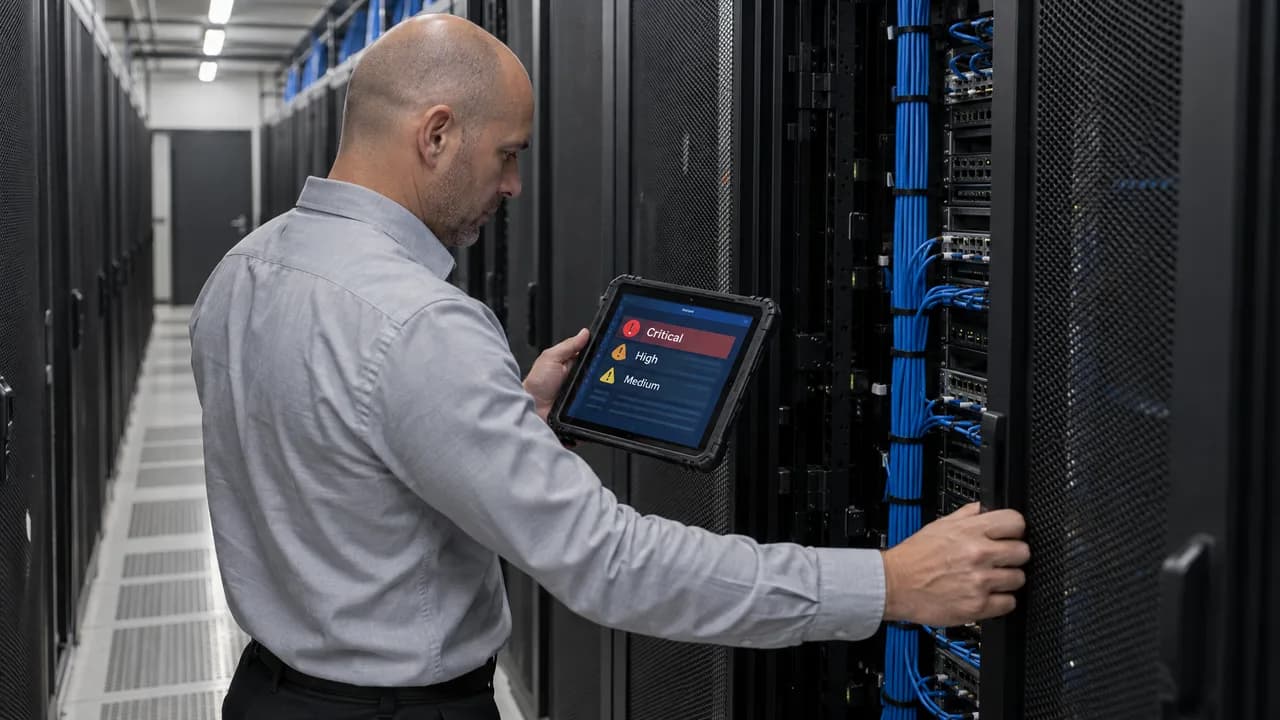
Vulnerability scan software probes your servers, web applications, devices and cloud assets for known weaknesses, and the right product is the one whose findings your team can rank, assign and close on a repeating cycle. Buy it to produce a quarterly report and you have bought a list of open doors with a date stamp on it. The value lives in the loop after the scan: which findings attackers are exploiting right now, who owns each fix, and whether a rescan proves the hole is shut.
What a Scanner Checks, and What It Never Will
A vulnerability scanner is software that compares what runs on your systems against catalogs of publicly known weaknesses and reports where the two match. It serves security and IT teams who need to know which machines and applications carry a documented flaw before an attacker finds them. It is narrower than a penetration test, where a person tries to chain weaknesses into real access, and narrower than threat monitoring, which watches for an attack in progress. It finds only what has already been written down, so it says nothing about a broken approval process, a phished executive or a password for sale on a forum. The documented list is still where the damage starts: CISA marked 24 of the vulnerabilities added to its Known Exploited Vulnerabilities (KEV) catalog in 2025 as known to be exploited in ransomware campaigns. Ranked "top 10" lists blend network scanners, web application testers and dependency checkers as if they were interchangeable, which is why our breakdown of scanning tools sorts them by the surface each one watches.
Criteria That Separate a Useful Scanner From a Noisy One
The list attackers work from keeps growing. “After an initial surge of added vulnerabilities after the database first launched, growth stabilized in 2023 and 2024, with 187 vulnerabilities added in 2023 and 185 in 2024,” cybersecurity firm Cyble explains in SecurityWeek's report on the catalog.[1] A scanner that cannot tell you which of its findings sit on that list is handing you sorting work and calling it a product.
Check these before you sign, and ask the vendor to show each one on your own assets during the trial:
- Exploit-aware ranking: the findings view separates known-exploited entries from raw severity, and that flag updates without waiting for a product release.
- Provable coverage: the tool reports how many hosts it discovered, so you can hold that count against your own inventory and see which machines nobody is scanning.
- Single-finding rescans: a fixed issue can be rescanned and closed with evidence the same day, without waiting for the next full sweep.
- Owner routing: each finding lands with a named person in the ticketing or workflow system your teams already use.
- Suppression with an expiry: false positives and accepted risks can be muted, and they come back for review on a set date instead of disappearing forever.
A vendor demo that leads with the total number of findings is answering the wrong question. Ask how many of yesterday's exploited findings are closed today.
Running Scans as a Remediation Cycle
- Build the asset inventory before the first scan, covering internet-facing servers, cloud accounts and every web application your developers ship, so gaps show up on day one.
- Scan on a fixed baseline schedule, then again after every deployment or newly exposed service, because new code and new ports are where fresh findings appear.
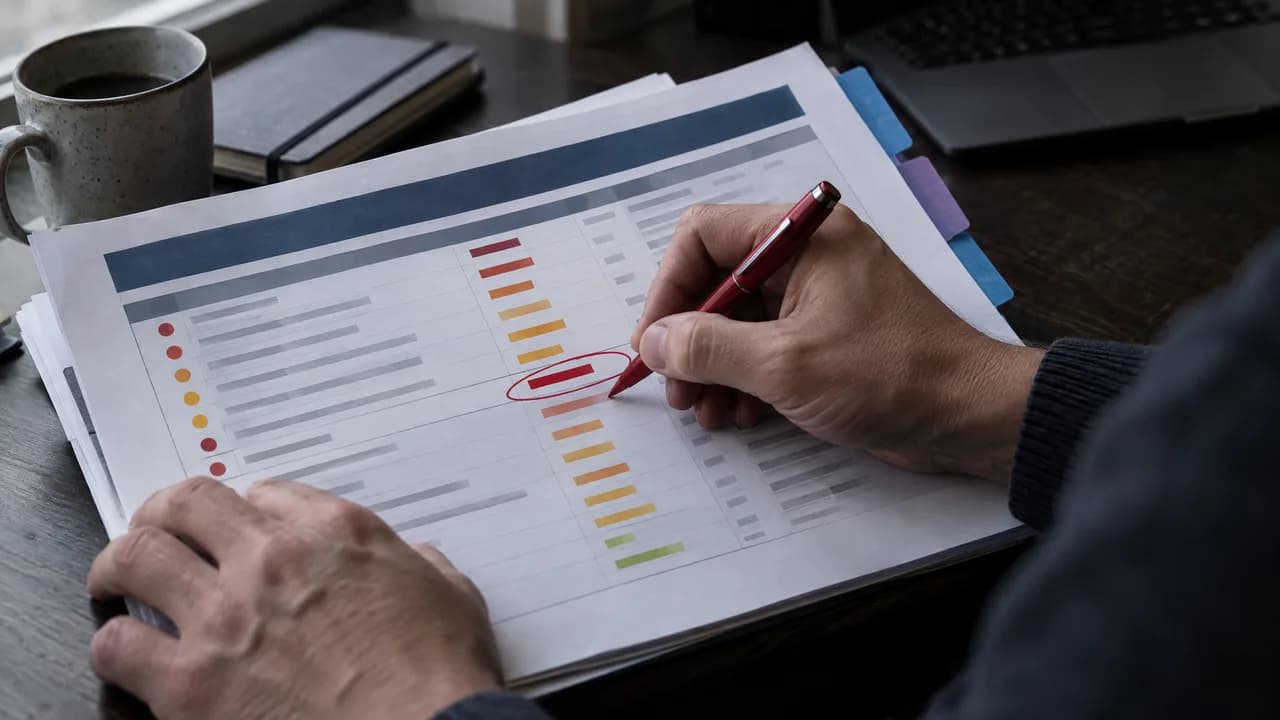
- Rank each finding by whether it is being exploited, then by whether it faces the internet, then by severity. The CVE Program states that a CVE entry carries an identification number, a description and at least one public reference, and that CVE does not provide severity scoring or prioritization ratings. The ranking is yours to build.
- Assign every ranked finding to a named owner with a due date that matches its tier.
- Rescan the repaired asset and close the finding only when the rescan comes back clean.
- Report time-to-close on the exploited tier to leadership, and drop the raw finding count from the slide.
The loop works because findings age badly. An unranked backlog grows faster than any team can clear it, so the dangerous five items wait behind five hundred cosmetic ones. Ranking by exploitation shrinks the urgent list to something a team can finish this week.
Free Tools, Paid Platforms or Managed Coverage
If you process card payments, you already have a floor. PCI DSS v4.0.1 Requirement 11.3.1 requires internal vulnerability scans at least once every three months, with high-risk and critical vulnerabilities resolved and verified by rescans.[3] Treat that cadence as the minimum an auditor will accept. A flaw that lands the week after a quarterly scan can sit open for close to three months on that schedule alone.
A free scanner is a sound choice when you have staff who will run it, rank its output and chase every fix to closure. The license costs nothing. The labor does. Without an owner, a free tool produces a report nobody reads, and that silence feels like safety right up until the breach.
Pay for a platform when several teams share the repair work and you need tracking, owner routing and audit evidence in one place. Our side-by-side look at scanning tools covers which product fits which surface.
Bring in managed coverage when your exposure runs past the network: executives whose home addresses are for sale, family accounts, leaked credentials. A scanner sees none of that, and attackers plan around exactly those blind spots.
Mistakes That Turn Scanning Into Paperwork
Reporting the finding count as progress is the habit that sinks programs. The number rises when you scan more assets and falls when you suppress noise, so it measures effort and configuration, never risk. Leadership learns to expect it to shrink, and teams learn to suppress instead of fix. Replace it with time-to-close on exploited findings.
Pointing a network scanner at your servers and calling the job done leaves the application layer dark. Vulnerable libraries live inside the software you ship, and Log4j showed how one buried component can expose thousands of systems at once. A 2026 arXiv paper, Advanced Vulnerability Scanning for Open Source Software: Detection and Mitigation of Log4j Vulnerabilities, treats detection inside open-source components as a problem of its own. Add a dependency scanner to your build pipeline.
Treat a clean scan as a passed penetration test and you have misread both. A scanner confirms a known flaw is absent; it never tries to combine three medium findings into domain access the way an attacker will. Schedule testing by a person for the systems that would end the company if breached.
Then there is the perimeter itself. Programs scoped to corporate assets ignore the routes attackers use to reach the people who hold the keys, starting with what strangers can learn about you. A patched server does nothing for an executive whose personal email and phone number are being sold today.
How Area 52 Puts Scan Findings to Work
Vulnerability scans are part of Overwatch, our managed package, where our ethical hackers scan your website for vulnerabilities and notify you when found. Dark web monitoring sits in the same package, sweeping for breaches of a client's emails and credentials. Data broker removal sits there too. That pairing matters because an exposed service and a leaked password for the person who runs it are one attack, and we track them as one.
Overwatch comes with a dedicated Digital Guard. Penetration testing is a separate service for when you need a person to chain findings into a proof of access. Real-time threat response belongs to our 24/7 SOC.
We combine reputation management with cybersecurity. We work with select clients, federal agencies, companies and high net worth individuals, and every engagement is tailored to the client. For scope and pricing, brief us directly: email greyman@a52.io or call 571-210-2227. Every week a known-exploited flaw stays open is a week someone else gets to use it first.
Frequently Asked Questions
What software is used for vulnerability scanning?
Four categories do the work. Network scanners probe hosts and open ports for flawed services. Web application scanners test running sites for injection and authentication flaws. Dependency or software composition scanners read the open-source libraries inside your code. Cloud configuration scanners check account settings against secure baselines. Each category comes in open-source and commercial forms. Most organizations need at least two: one for infrastructure and one for the applications they build, because neither type sees the other's surface well enough to stand alone.
What is an example of a software vulnerability?
CitrixBleed 2 (CVE-2025-5777) and flaws in Oracle E-Business Suite were among the vulnerabilities CISA added to its KEV catalog in 2025 and marked as known to be exploited in ransomware campaigns.[1] Each is a defect in widely deployed vendor software that lets an outsider do something the product was never meant to allow. The pattern repeats: the flaw is disclosed, given a CVE identifier, patched by the vendor, and then exploited against every organization that has not applied the fix yet. That window is what your scan program exists to close.
What are two types of vulnerability scans?
The most common split is internal versus external. External scans look at your systems from the internet, the way an outside attacker sees them. Internal scans run from inside your network and find what an intruder or a compromised laptop could reach. A second, equally useful split is authenticated versus unauthenticated. An authenticated scan logs in with credentials and reads installed software directly, which finds far more missing patches than probing from outside. Run both kinds; each answers a question the other cannot.
What are the top 10 vulnerability scanning tools?
No single top-10 ranking holds for every organization, because published lists mix tools built for different surfaces and rank them as rivals. Build your shortlist by category instead: name the surfaces you own, pick two candidates for each, and run them against the same assets during a trial. Score them on whether they flag known-exploited findings, how many of your hosts they discover, and whether a fixed issue can be rescanned and closed quickly. The winner is the tool your team will keep running and acting on.
Sources
- securityweek.com
Of the 24 security defects exploited by ransomware groups, the widely exploited CitrixBleed 2 (CVE-2025-5777) and Oracle E-Business Suite (CVE-2025-61882 and CVE-2025-61884) flaws stand out, mainly due to their broad impact.
Checked on November 24, 2026
- cve.org
CVE does not provide severity scoring or prioritization ratings for software vulnerabilities.
Checked on November 20, 2026
- origin-www.paloaltonetworks.in
11.3 External and internal vulnerabilities are regularly identified, prioritized, and addressed. Req # PCI DSS v4.0.1 Requirement N/A Palo Alto Networks Customer Joint Comments 11.3.1 Internal vulnerability scans are performed as follows: • At least once every three months.
Checked on November 23, 2026
Sources checked between November 20, 2026 and November 24, 2026.
Get new articles by email
New articles from Area 52, sent to your inbox.
By subscribing you agree to receive emails from Area 52 about new articles. You can unsubscribe at any time.