Vulnerability Scanning Tools Compared by What They Do With a Finding
Match a scanner to the surface you need watched, run a fair two-tool trial, and know which vendor answers should end the conversation before you sign.
By the Area 52 team
8 min read
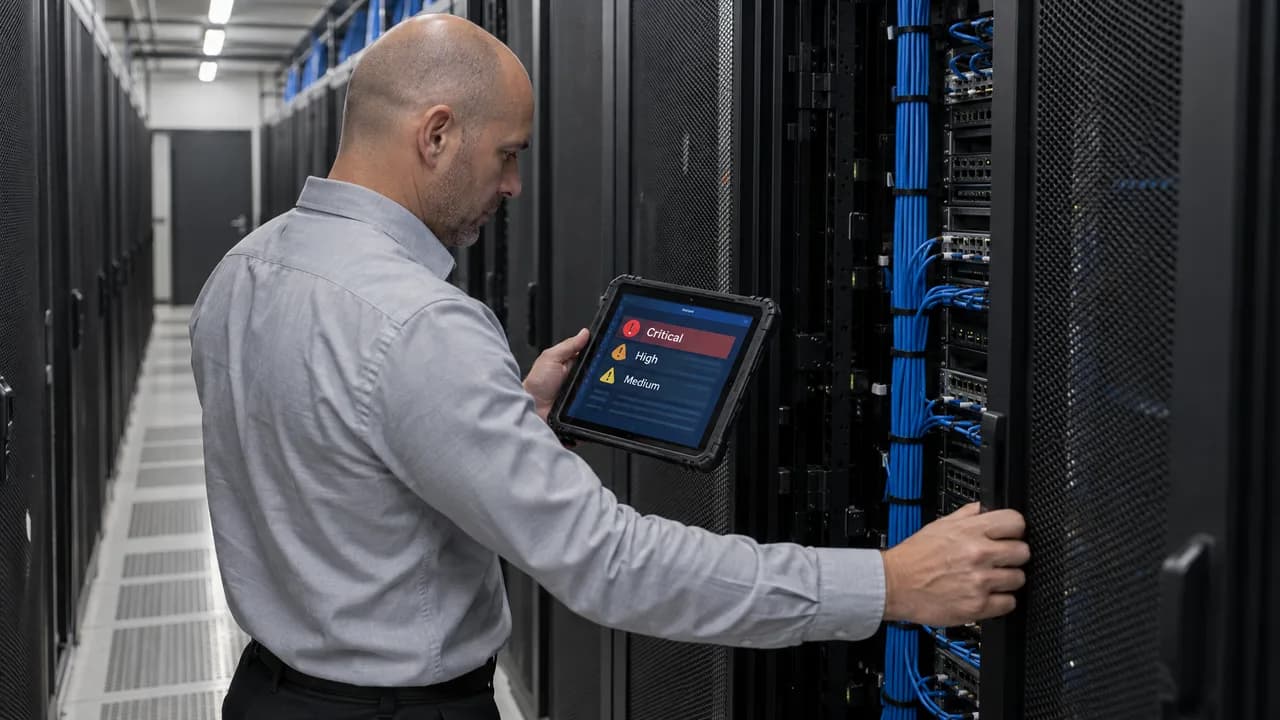
Three vulnerability scanning tools cover the common cases. OpenVAS fits teams that want an open-source network scanner. ZAP fits developers testing web applications while they build them. Rapid7 InsightVM fits organizations that need live monitoring and remediation tracked across several teams. Choose among them by how each one ranks its findings against what attackers are exploiting right now. The raw count of findings is the least useful number a scanner produces, and it is the number vendors lead with.
Start With the Surface You Need Watched
Ask one question before you open a single product page: who fixes a finding, and how fast do they hear about it? The answer puts you in one of three situations.
If you own internet-facing servers and nobody sweeps them on a schedule, you need a network scanner that runs on its own, and an open-source option is a defensible start. If your exposure is the code you ship, the scanner belongs inside the build, where the developer who wrote the flaw is the person who sees it. If findings already pile up and the trouble is that nobody owns them, buying more detection makes things worse. You need a platform that assigns and tracks remediation across teams.
Whichever situation is yours, treat severity data as perishable. NIST's NVD news page states that a data refresh and synchronization deployment affected approximately 95% of all existing vulnerabilities within the NVD. The same page says that, because of a process change, all CVEs marked as deferred the previous year will be moved to "Modified After Enrichment." A report you exported for last quarter's audit may rank its findings on data that has since been rewritten. Vulnerability scanning software that runs once a year gives you the same false comfort as a one-off free scan: an accurate picture of a day that has already passed.
OpenVAS, InsightVM and ZAP Side by Side
| Option | What it scans | Who it suits | What to watch for |
|---|---|---|---|
| OpenVAS | Networks; an open-source, full-featured scanner maintained by Greenbone | Organizations of any size that want an open-source network sweep | Its naming changed in July 2025, so check that documentation and feeds match the current name |
| Rapid7 InsightVM | Vulnerabilities across the estate, with live monitoring and real-time insight | Teams that must track remediation across several owners | Older runbooks may still call it Nexpose, its former name |
| ZAP | Web applications during the development lifecycle; open source | Developers testing apps before release | Its stewardship has changed, so confirm who maintains the build you deploy |
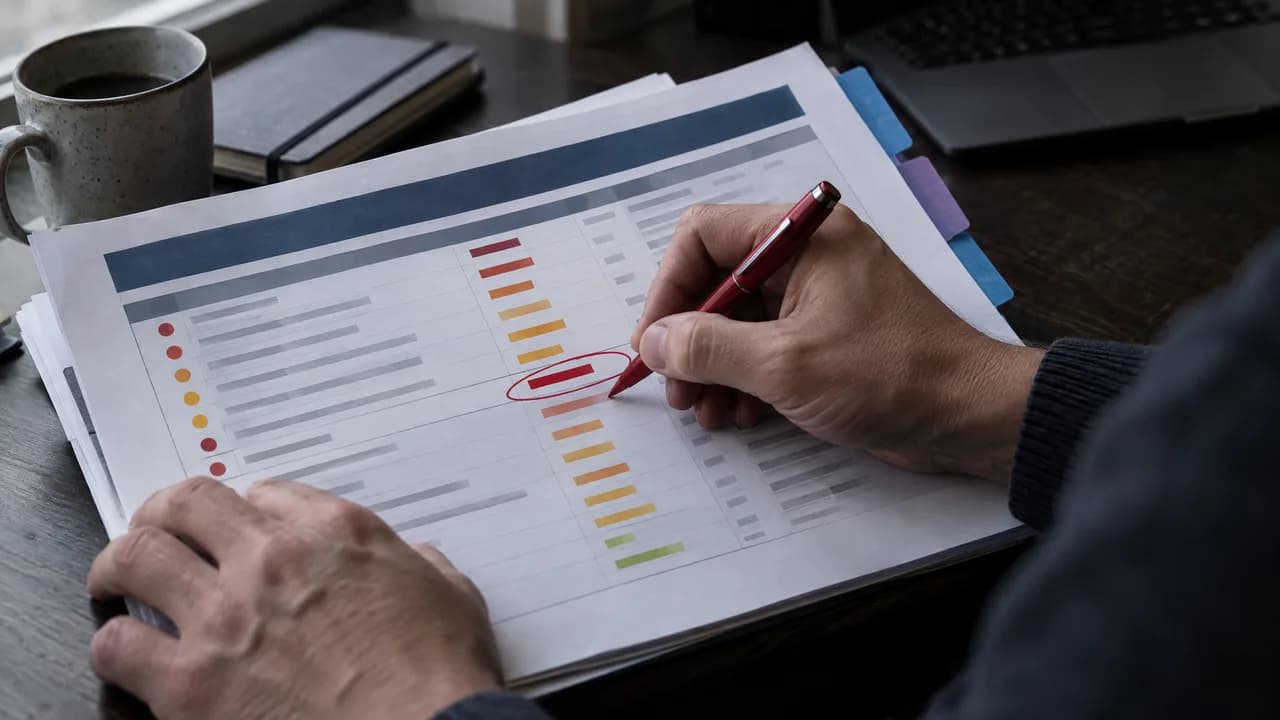
No row in that table tells you whether a finding is under active attack, and that gap matters more than any column. CISA added 24 vulnerabilities to its Known Exploited Vulnerabilities catalog in 2025 that were known to be exploited in ransomware campaigns, as reported by SecurityWeek. Those are the findings that turn a scan report into an incident. A scanner that buries them on page forty, under hundreds of low-risk items, has done its detection job and failed at yours. ➀
Ranked lists of scanners mislead the same way ranked lists of monitoring tools do. They score features and plugin counts, then never ask whether anyone acts on the output.
Triage Quality Separates a Useful Scanner From a Noisy One
The exploited list is short, and that is its value. Cyble, quoted by SecurityWeek, notes that growth of the KEV catalog stabilized with 187 vulnerabilities added in 2023 and 185 in 2024. A few hundred entries a year is a fix queue a real team can clear. A raw scan dump is not.
Ranking is the scanner's job and yours, because the underlying identifier doesn't do it. The CVE Program's 2018 explainer on the CVE and CVSS relationship describes CVE as a list of entries, each with an identification number, a description and at least one public reference, and says CVE does not provide severity scoring or prioritization ratings. A tool that hands you CVE IDs sorted by a single generic score has passed the hard decision back to you.
| Criterion | Evidence to look at |
|---|---|
| Exploited-first ranking | Whether the report flags findings that appear in the KEV catalog and puts them above everything else |
| Data freshness | Whether severity updates after an NVD record changes, or stays frozen at the first scan |
| Scope fit | Whether the tool scans the surface you named (network hosts or web applications) rather than a demo target |
| Ownership | Whether a finding can be assigned to a named person and tracked until it is closed |
| Verification | Whether a rescan confirms a fix and closes the finding without someone editing a spreadsheet by hand |
Test against attack classes you care about. A 2007 paper from the Pacific Rim International Symposium on Dependable Computing, Testing and Comparing Web Vulnerability Scanning Tools for SQL Injection and XSS Attacks, set up its comparison around two named attack classes. That is the right instinct for any buyer: define the flaws that would hurt you, then see which tool finds and ranks them.
Running a Two-Tool Trial Before You Commit
- Choose the two options that match your surface: OpenVAS and InsightVM for network estates, ZAP plus one network scanner if you also ship web applications.
- Point both at the same scope, beginning with internet-facing hosts. CISA's StopRansomware Guide recommends regular vulnerability scanning to identify and address vulnerabilities, especially on internet-facing devices, to limit the attack surface.
- Plant a known flaw on a test host, an unpatched service whose CVE you have written down, so you can check detection against a fact rather than a vendor claim.
- Compare which findings each tool places at the top, and whether the ones on the exploited list land there. Ignore the total count.
- Hand both reports to the engineer who will patch, and record how long each takes to become a fix ticket that engineer accepts.
- Apply the fix, rescan, and confirm the tool closes the finding without manual cleanup.
- Keep the tool that produced the faster, correct fix, even if the other found more.
Apply the same discipline to dark web monitoring tools and any other detection product you are weighing. A trial that measures alerts instead of actions measures the wrong thing.
Questions That Expose a Weak Scanner Pitch
How does your report rank a finding that is under active exploitation?
A strong answer shows you a report in which exploited vulnerabilities sit in their own tier above the rest, with the reason visible on the page. A weak answer recites a severity scale and promises the dashboard is "risk-based" without showing which data drives the risk.
What happens to a finding when its NVD record changes?
You want to hear that severity and status update on the next scan, and that the change is logged so you can see why a ranking moved. A red flag is a vendor who treats the first reading as permanent, or who has no idea how record changes reach the product.
Which compliance schedules can it run, and what does each scan check?
A convincing vendor names the frameworks that apply to you and the checks behind each one.
Who confirms a finding before it reaches an engineer?
Good answers describe a verification step: a rescan, a manual check, or a penetration test on the findings that matter. A weak answer treats every alert as truth and leaves your engineers to discover the false positives one ticket at a time, which is how a team learns to ignore the scanner.
What does the tool not see?
This question separates sellers from advisers. A credible vendor names the edge of its scope: the hosts and applications it was pointed at, and nothing beyond them. A vendor claiming "complete visibility" is describing a scanner that does not exist.
Where Overwatch Fits Around Your Scanner
A scanner watches the infrastructure you own. The exposure that reaches an executive often sits outside it: a home address for sale on a data broker site, a breached password, a hostile search result. A clean scan report says nothing about any of those, and an attacker planning a targeted approach can start there.
Overwatch, our managed package, covers content creation, amplification, suppression, data broker removal, dark web monitoring, vulnerability scans and positive reviews. We tailor it to each client rather than selling it as a subscription tier. Each Overwatch client has a dedicated Digital Guard. We combine reputation management with cybersecurity, so the scan findings and the personal exposure land in one picture instead of two vendors' inboxes.
Penetration testing, OSINT, private investigations and our 24/7 SOC sit outside Overwatch as separate services. That split matters for the questions above: a penetration test is how you confirm what a scanner flagged, and real-time threat response belongs to the SOC. "The Area 52 team has truly elevated our security posture, from enhancing our tools and capabilities to supporting client needs with expertise and professionalism." (Sarah Subrizi, VP Agency Operations, AZDS)
If your scanner is producing findings nobody owns, or your leadership's personal exposure has never been swept at all, that gap is open today. Email greyman@a52.io or call 571-210-2227 to scope an engagement.
Frequently Asked Questions
Which tool is best for vulnerability scanning?
The best tool is the one whose top findings your team fixes first, and that depends on what you are protecting. For a network estate on an open-source budget, OpenVAS is the natural starting point. For code you ship, ZAP runs where developers can act on it. For organizations where several teams share the fix work, InsightVM's remediation tracking addresses the real bottleneck. Run the two that match your surface against the same scope and keep the one that produced a correct fix faster.
What are the top 5 vulnerability management tools?
A top-five list ranks detection features, while vulnerability management is judged by what happens after detection: assignment, fix and verified closure. Of the options covered here, InsightVM is the one built around tracking remediation across teams. OpenVAS and ZAP are scanners at heart, and they become a management program only when you add ownership, retesting and a rule that exploited flaws go first. Judge any shortlist by those three steps, not by its position in a ranking.
What is the most commonly used vulnerability scanner?
Popularity tells you little about fit, because a widely used network scanner can still be the wrong pick for a team whose exposure is web applications. OpenVAS is the long-running open-source network scanner, maintained by Greenbone, which keeps it in many conversations. ZAP holds the equivalent place for open-source web application testing. Before adopting either because it is familiar, check the July 2025 naming change for OpenVAS and the change in stewardship for ZAP, so your documentation and builds match the current project.
Sources
- ➀ SecurityWeek (reporting CISA KEV catalog data)
Throughout 2025, the agency added 245 security defects to its Known Exploited Vulnerabilities (KEV) list, including 24 bugs that have been exploited in ransomware attacks.
- NIST
Data Refresh and Synchronization: The deployment process affected approximately 95% of all existing vulnerabilities within the NVD.
- cve.org
CVE does not provide severity scoring or prioritization ratings for software vulnerabilities.
- cisa.gov
Conduct regular vulnerability scanning to identify and address vulnerabilities, especially those on internet-facing devices, to limit the attack surface.
Sources checked on November 20, 2026.
Get new articles by email
New articles from Area 52, sent to your inbox.
By subscribing you agree to receive emails from Area 52 about new articles. You can unsubscribe at any time.