Hiring a Private Investigator Near Fairfax Starts With One Registry Check
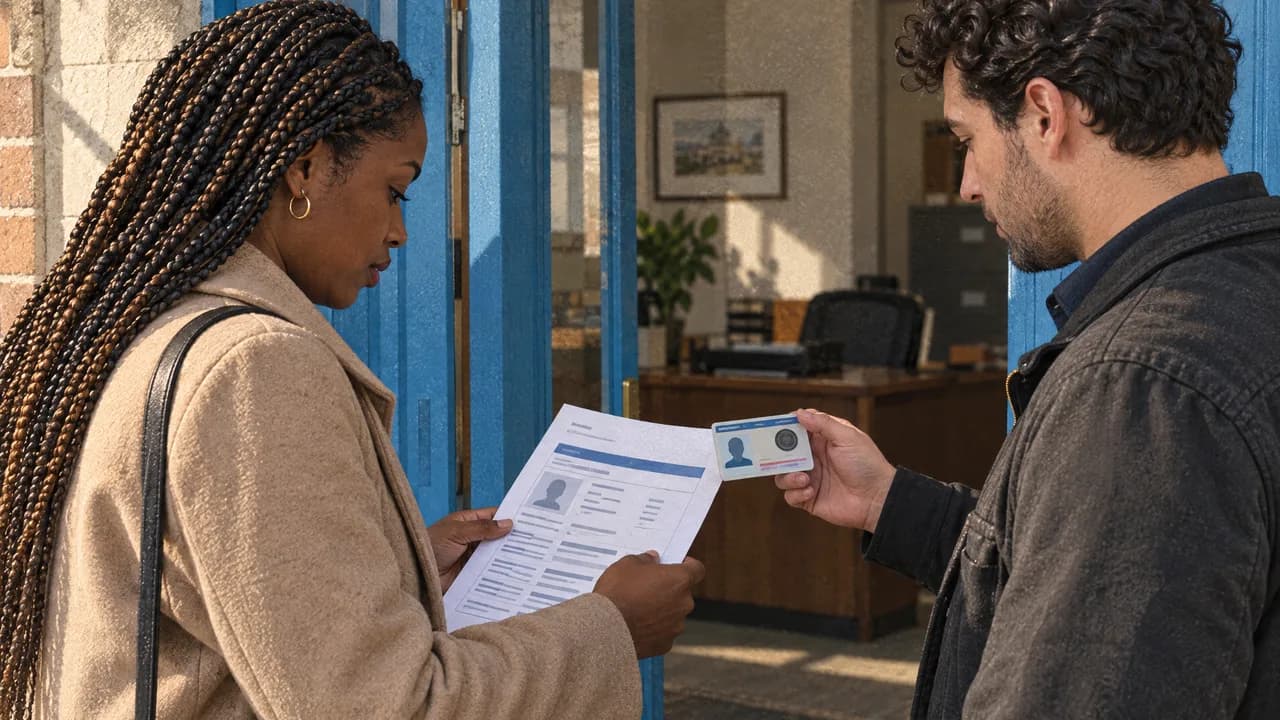
Hiring a private investigator in Fairfax begins with two checks: an active Virginia license and a written scope of work. Skip either and you fund an information risk you cannot audit.
By the Area 52 team
7 min read

Hiring a private investigator Fairfax starts with two verifications: an active Virginia license for the business and a current registration for the individual doing the work, both confirmed before a single retainer check clears. The engagement you are buying is not surveillance hours. It is a chain of lawful, documented collection that has to hold up when someone hostile reads it. Most buyers vet personality and price, then discover the paperwork problem after the file is already in play.
An Investigator in Fairfax Is a Licensed Business, Not a Freelance Favor
A Virginia private investigation agency is a regulated security business, and the investigator you hire is a registered individual under that business's license. The state does not treat the work as informal research. Per the Fourth Circuit's published opinion on Virginia's private security licensing framework, every private security services business, including private investigation agencies, must hold a state license, and every individual private investigator must register with the state. That same opinion records the framework's financial and administrative load: a $25,000 surety bond or general liability insurance with minimum coverage of $100,000 and $300,000, plus a designated compliance agent.[1]
What this is not: a background-check website, a social-media scrape, or a friend with a law-enforcement contact. Those produce impressions. A licensed engagement produces a record with a named collector behind it. The distinction matters because the output of an investigation is personal information about someone, and how the privacy laws define personal information is broader than most clients assume. The person who gathers it improperly hands you a liability along with the file.
The Criteria That Separate a Defensible File From a Story
Judge an investigator the way you would judge any evidence source: by what can be produced, not by what can be asserted. The concrete items below are what to ask for and read before signing.
| Criterion | What to verify |
|---|---|
| License status | Business license and the individual's registration, active, matched to the people who will actually work the case |
| Written scope | The questions being answered, the methods permitted, and the deliverable format, in the engagement letter |
| Record chain | How observations, timestamps, and source material are logged and preserved for later use |
| Lawful method policy | Stated limits on pretext, recording, trespass, and database access, in writing |
| Reporting cadence | Interim findings you can act on, not one final PDF at the end |
| Data handling | Where the file lives, who can open it, and what happens to it after the engagement closes |
The cost conversation belongs inside that same scrutiny. A reasonable budget for a professional investigator typically runs $95 to $200 per hour depending on case type, location, experience and urgency, and most investigations open with a $1,000 to $1,500 retainer applied toward hours, per the budget breakdown published by PR Investigations. A quote far under that band is not a bargain. It usually means unlogged hours, unregistered labor, or a deliverable that will not survive a hostile reader.
Vetting registration first is not bureaucratic box-ticking. An unregistered operator's file is worth less than nothing the moment it becomes evidence, because the opposing side gets to attack how it was made.
Run the Engagement Backward From the Decision
The mechanism that separates a productive investigation from an expensive diary is sequence. You are not buying hours of looking. You are buying a decision-grade answer to a question you can state in one sentence. Build it in this order:
- Write the decision the file must support, in one sentence, and the date it has to support it.
- List what evidence would change that decision, and what evidence would not.
- Set the lawful boundaries up front: what methods you will not authorize, and what the investigator must escalate to you before doing.
- Agree the chain-of-custody and reporting format before work begins, so nothing has to be reconstructed later.
- Fund a defined first phase and stop there for a written readout before extending.
The fourth step is where most engagements quietly fail. If the reporting standard is decided after the fieldwork, you get observations you cannot use and timestamps you cannot defend. The work has to be collectible in a form that survives a second reader.
The Signals That Tell You It Is Time to Call
You face this decision when a specific, high-stakes question about a person or a situation cannot be answered from what you already hold. The signals that settle it are concrete: a counterparty whose identity does not reconcile across documents, a pattern of contact you cannot attribute, a due-diligence gap before a transaction, or a legal matter where an unverified assumption is about to become your position.
If the question is answerable from your own records, an investigator is the wrong spend, and a competent one will tell you so. If the answer requires lawful observation, records, and interviews gathered under a documented process, that is the work. If the answer requires protecting your own exposure while the question is open, the engagement is bigger than the case file.
The outcome of each choice is different. A scoped, licensed engagement produces a decision you can defend. A broad, open-ended one produces motion and an invoice. The tell is whether the investigator can tell you, in the first conversation, what a negative result would look like.
Where Clients Get This Wrong
Confusing speed with verification is the mistake that shows up most often. A firm answer delivered by someone whose registration you never checked feels efficient and is the opposite. Confirm both the business and the individual before you discuss the case, not after.
Funding the search instead of the question comes in a close second. Retainers that apply to hours reward more hours, so the client has to own the question, the boundary, and the stop point. Otherwise the meter runs on curiosity rather than on a decision.
Treating public records as neutral is a third trap. Broker files, old addresses and open-source traces cut both ways, and the same trail that helps you build a case maps your counterpart's exposure too. Reading open sources without a method is how OSINT tools solve the easy half of the investigation and leave the hard half unexamined. The discipline is deciding which sources are admissible to your decision before you start pulling them.
Assuming the file protects you without data handling is the fourth. An investigation that gathers personal information and then leaves it in an unmanaged inbox has created a new exposure, not closed one. What the privacy laws actually cover is the test to run before the file lands on your laptop.
How We Handle Investigations at Area 52
We treat a private investigation as one piece of a larger protection problem, not a standalone service. Our private investigations practice runs alongside the same capabilities that close the gaps an investigation usually exposes: data broker removal, suppression of personal data, dark web monitoring, vulnerability scans, and penetration testing, with a dedicated Digital Guard assigned per client. Content creation and amplification support the reputation side when a finding has to be corrected in public. The combination is deliberate. An investigator who finds something and leaves the public record untouched has done half the work.
Who should look elsewhere: if you need a single records pull with no follow-on exposure to manage, a narrow licensed engagement is the right size and we are more than that. If you need the case and the perimeter handled together, that is exactly the shape we are built for.
We are at 1350 Beverly Road, STE 115, PMB 175, McLean, Virginia 22101. Reach us at greyman@a52.io or +15712102227, and the initial conversation is about the question, not the hours.
Frequently Asked Questions
How much does a private investigator cost in Virginia?
Expect a reasonable budget in the $95 to $200 per hour range, varying with case type, location, experience and urgency, with most investigations opening on a $1,000 to $1,500 retainer applied toward hours, per the published budget guidance. A licensed Fairfax engagement carries real regulatory overhead, so quotes well below that band usually signal unregistered labor or unlogged work you cannot defend later. Ask for the hourly rate, the retainer, and how each is applied in writing.
What is a private investigator not allowed to do?
A licensed investigator cannot operate outside the law to get an answer: trespass on private property, intercept private communications, impersonate law enforcement, or obtain records through improper access. Virginia's framework regulates who may perform the work at all, which means an investigator who offers methods a licensed firm will not authorize is telling you something about their registration. Ask for the written method policy. The boundaries protect you, because a finding obtained unlawfully is a liability you inherit.
Can a private investigator see my text messages?
No. An investigator cannot read your text messages, call logs, or messaging-app content without your consent or lawful authority such as a court order. What investigators can lawfully gather is public and regulated records, observable activity, and documented sources. Anyone who claims to pull message content on request is describing access they do not lawfully have, and that gap is your reason to walk away.
Sources
- ca4.uscourts.gov
The applicant must also (1) be at least 18 years old; (2) complete the Board's initial and continuing training requirements; and (3) submit fingerprint cards and pay a $41 processing fee.
- prieyes.com
Sources checked on October 30, 2026.
Get new articles by email
New articles from Area 52, sent to your inbox.
By subscribing you agree to receive emails from Area 52 about new articles. You can unsubscribe at any time.