Information Warfare Examples: Why the Kill Chain Model Falls Short
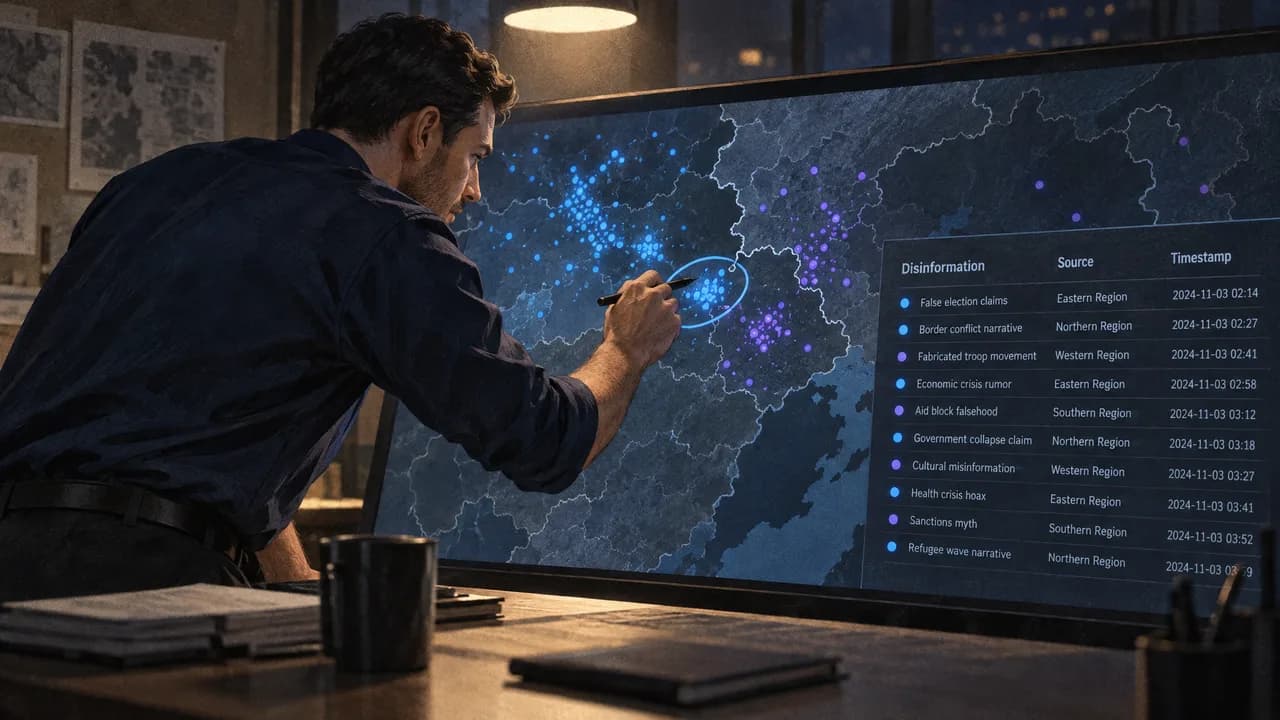
Most information warfare examples focus on the attack, not the target. This article explains why the kill chain model misses the real threat landscape and what executives should actually defend against.
The Quick Answer: What Information Warfare Examples Actually Show
Most executives approach this topic expecting a taxonomy of cyberattacks: phishing, ransomware, denial of service. That framing is wrong, and it leads to defensive strategies that miss the actual mechanism.
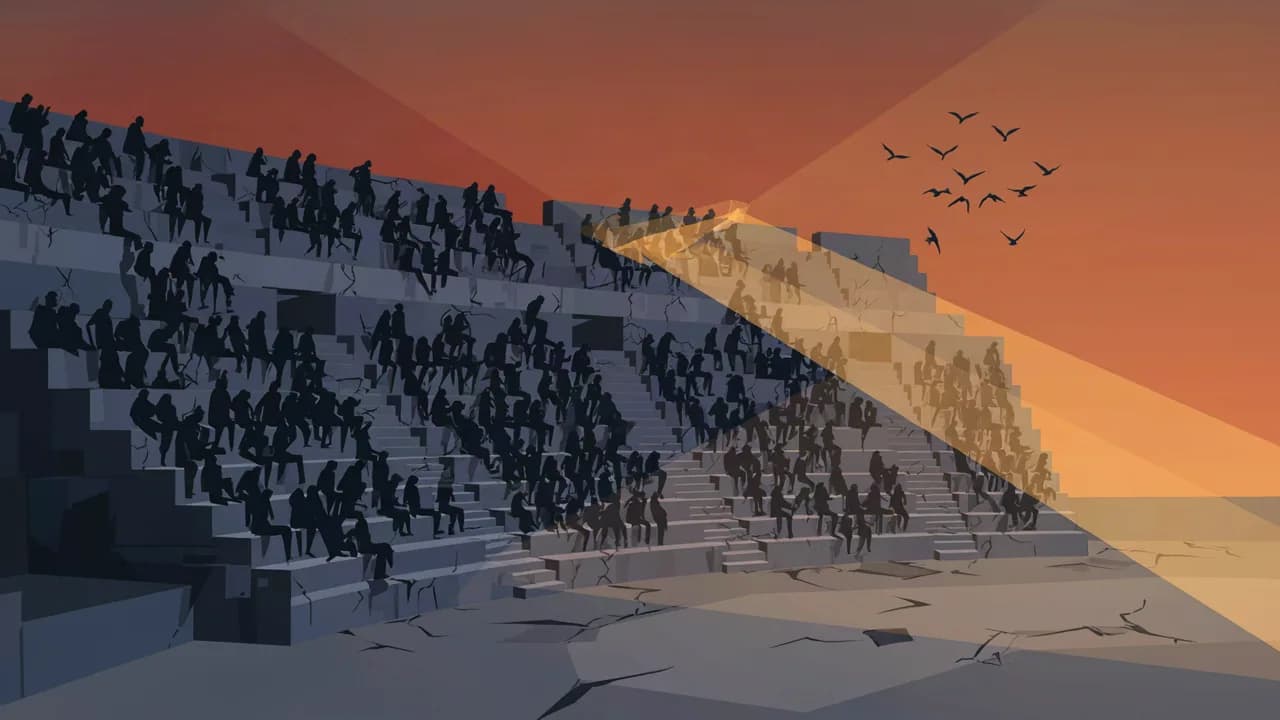
The insight that matters for executives is simpler and more uncomfortable: information warfare treats truth as a variable, not a fixed asset. The adversary's job is not to break your firewall. It is to make you, your employees, or your customers act against your own interests.
That distinction changes everything about how you defend. If information warfare examples are just attack types, you buy more security tools. If they are behavioral manipulation, you build a different kind of defense entirely.
How Information Warfare Works Under the Hood
The mechanics of information warfare are best understood through the framework developed in the peer-reviewed literature. That taxonomy matters because it separates the weapon from the target.
Information warfare operates on a simple premise: information has power only insofar as it informs. At the most fundamental level, it pertains to the interpretation of that which may be sensed, or their abstractions.[1] The adversary does not need to control what is true. They need to control what you believe is true and what you do next.
The target's behavior, not the target's systems, is the objective.
The Weapon: Malicious Programs and Disinformation
The weaponry of information warfare splits into two broad categories that executives rarely keep separate. The first is technical: malicious programs designed to compromise systems, steal data, or disrupt operations. The second is psychological: fabricated narratives, manipulated media, and coordinated amplification designed to change perception.
The Target: Behavior, Not Systems
Here is where most defense strategies fail. Information warfare does not seek to destroy your infrastructure in most cases. It seeks to alter decisions. A well-executed operation makes your CFO approve a fraudulent transfer. It makes your customers believe your product is unsafe. It makes your board question leadership.
The target is the human decision-maker, and the medium is the information environment around them. Executives who grasp this stop asking "what did they hack" and start asking "what did they make us believe."
Why Information Warfare Examples Are Harder Than They Look
The difficulty is structural, not incidental. Information warfare attacks are hard to detect because they blend into the information environment they exploit. A phishing email looks like a legitimate message. A disinformation campaign looks like a genuine controversy. The attack surface is not a network; it is the entire information environment your organization inhabits.
This is why the definition of information warfare that most executives carry is wrong. They think of it as a cyberattack with a narrative component. In reality, the narrative is the attack, and the cyber component is just the delivery mechanism. The distinction matters because it determines where you look for threats.
A second structural problem is attribution. Even when you detect an operation, proving who ran it is extraordinarily difficult. Adversaries use proxy infrastructure, false flags, and coordinated networks. By the time you have enough evidence to act, the operation has already achieved its objective.
The third structural problem is speed. Information warfare moves at the speed of trust, which is to say it moves faster than your incident response plan. A false narrative can spread globally in hours. Your legal team will still be drafting the takedown notice.
The Step-by-Step Approach to Defending Against Information Warfare
Defending against information warfare requires a process that treats monitoring as continuous, not episodic. The approach below mirrors how our OSINT investigations team works, and it applies whether you are protecting a corporation or a high-net-worth individual.
Map your information exposure. Begin by cataloging every place where information about you, your executives, or your company lives: data broker listings, social media profiles, news archives, forum posts, public records. This baseline is your attack surface. Without it, you cannot know what an adversary sees.
Identify your high-value narratives. Determine which stories, if false, would cause the most damage. For a public company, this might be financial integrity. For a founder, it might be personal conduct. Adversaries target narratives that move markets, destroy trust, or trigger regulatory action.
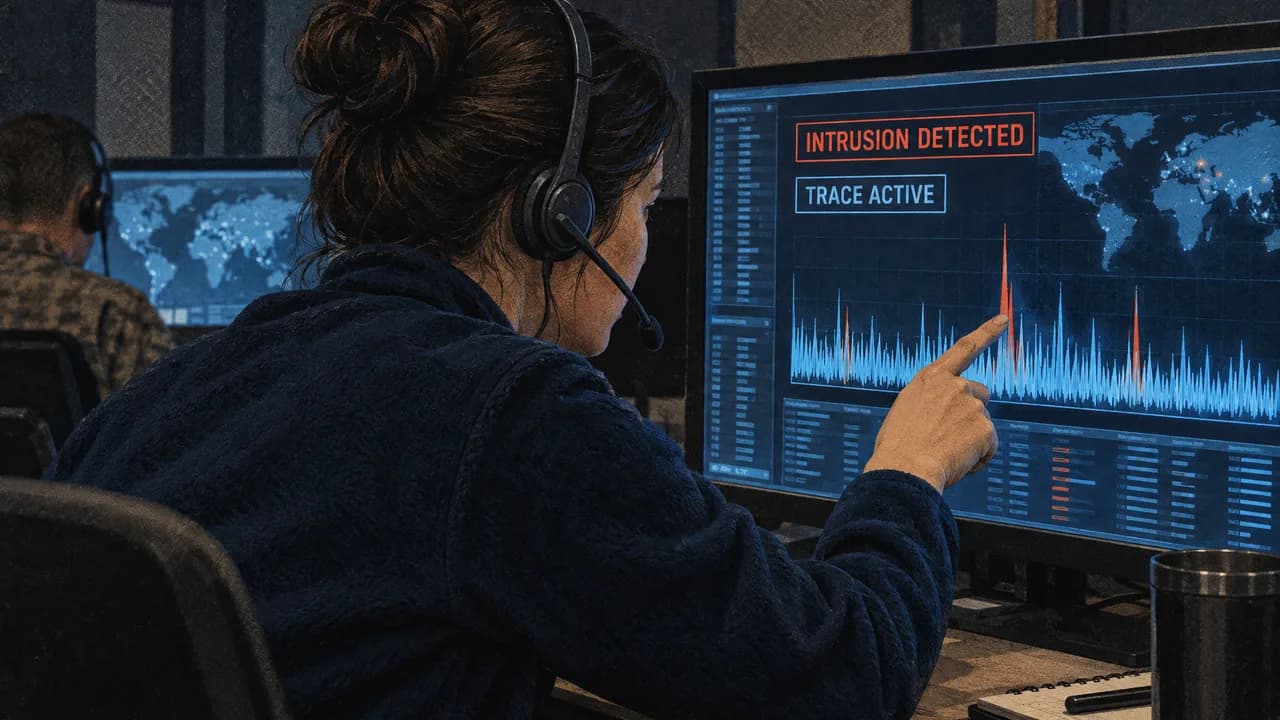
Establish continuous monitoring. Information warfare is not a one-time event. Adversaries probe, test, and iterate. Your monitoring must be equally persistent. This includes dark web monitoring for credential leaks and coordinated monitoring of social platforms for coordinated amplification.
Develop rapid response playbooks. When a false narrative appears, you have hours, not weeks. Your playbook must predefine who decides, what evidence is gathered, and how you respond publicly. The common pitfalls in OSINT investigations show that hesitation is the most common failure point.
Preempt with suppression and amplification. The most effective defense is making the false narrative harder to find and the true narrative more visible. Data broker suppression removes the personal information that adversaries use to build targeted attacks. Positive content creation and amplification ensure that when someone searches your name, they find what you want them to find.
Common Mistakes Executives Make in Information Warfare Defense
The most expensive mistake is treating information warfare as an IT problem. CISOs manage firewalls and endpoint detection, but the narrative operates outside your network perimeter. An operation targeting your CFO's personal reputation will never appear in your SIEM. It lives on social media, in news articles, and in private messaging apps.
A subtler failure is the reactive posture. Most organizations build their information warfare defense after they have already been hit. They respond to a crisis, spend heavily on remediation, and then let the program lapse until the next incident. Adversaries notice this rhythm. They time their operations accordingly.
Another mistake that costs organizations dearly is confusing suppression with deletion. Data broker removal is a formal opt-out process, not a digital eraser. If you treat it as a one-time task, you're not protecting yourself; you're just cleaning one shelf in a store that restocks every night. The re-scan cycle is what makes the protection real.
Then there is the coordination gap. In most organizations, cybersecurity, legal, communications, and executive protection operate in separate silos. An information warfare operation crosses all four simultaneously. The response requires a unified team with a single command structure. Most organizations discover this gap mid-crisis.
The quietest failure is ignoring the personal dimension. Executives assume their personal information is separate from their professional risk. Adversaries know otherwise. A data broker record with your home address, combined with a fabricated story, becomes a physical security threat. The data broker suppression guide exists because this gap is where real risk lives.
What the Data Says About Information Warfare Risk
The academic literature on information warfare has moved from conceptual frameworks to quantitative risk models. The shift matters: it means the field now treats uncertainty as a measurable quantity.
The probabilistic approach gives executives a concrete way to think about defense. Instead of asking "are we being targeted," the question becomes "what is the probability of an operation against us in the next quarter, and what would it cost." That framing turns information warfare defense from an unquantifiable fear into a budgetable risk.
The models consider factors like the value of the target, the capability of likely adversaries, and the visibility of the information environment. For a public company with a controversial product, the probability is higher. For a low-profile executive, it is lower but rarely zero.
Executives should push their security teams to adopt this kind of probabilistic thinking. A defense strategy that cannot quantify risk cannot prioritize resources. And a defense strategy that prioritizes everything protects nothing.
Frequently Asked Questions
What are the four types of warfare?
The four types of warfare are conventional warfare, irregular warfare, cyber warfare, and information warfare. Conventional warfare involves traditional military force between states. Irregular warfare includes insurgency and guerrilla tactics. Cyber warfare targets information systems directly. Information warfare targets the information itself and how it shapes perception and decisions. The categories overlap: an adversary conducting cyber warfare often uses information warfare tactics to shape the narrative around the attack.
What is information warfare?
Information warfare is the use of information and information systems to gain an advantage over an adversary. Operations can target technical systems, human decision-makers, or the broader information environment. The goal is not always destruction; it can be deception, coercion, or behavioral change.
What are the five types of warfare?
The five types of warfare framework adds economic warfare to the four-type model. Economic warfare targets a nation's financial systems and resources, using sanctions, currency manipulation, or trade disruption. Information warfare remains distinct because it operates on perception rather than physical or economic reality. Adversaries often combine all five types in a single operation. An information warfare campaign might trigger an economic response, which then requires a conventional or irregular response.
For a deeper look at how adversaries use information to target executives and organizations, read our Information Warfare Explained guide and learn about executive digital protection.
Sources
- Information on Wikipedia
At the most fundamental level, it pertains to the interpretation (perhaps formally) of that which may be sensed, or their abstractions.
Sources checked on August 19, 2026.
Get new articles by email
New articles from Area 52, sent to your inbox.
By subscribing you agree to receive emails from Area 52 about new articles. You can unsubscribe at any time.