Us Army Information Warfare Doctrine Is a Defensive Playbook
Us Army information warfare doctrine defines five activities. We map them onto executive digital protection, broker removal, and sustained defense.
Army doctrine describes five information activities that units integrate into a single continuous operation: enable, protect, inform, influence, and attack, and treating those five as one standing function rather than five offices is the part executives should copy. The doctrine exists because information advantage is a condition you hold or lose in real time, not a product you commission once. We think the same structure is the most defensible model for protecting an executive's name, because the failure mode on both sides is identical: static thinking against a moving target.
What the Army Actually Built, Component by Component
Army doctrine now describes five information activities that units integrate to create information advantage: enable, protect, inform, influence, and attack (Army University Press, Military Review). Read that list slowly, because it is not a sequence and it is not a menu. It is a description of one machine with five moving parts, and the doctrine insists units run them together rather than assigning each to a separate staff section and filing quarterly reports.
The framework defines information advantage as a condition in which a force holds the initiative in situational understanding, decision-making, and relevant actor behavior (AUSA, Information Advantage). A condition is a state you occupy, not an artifact you deliver. That single word choice does most of the work in the doctrine, and it is the reason the Army keeps the five activities in one loop instead of shopping them out.
Older writing points the same direction. A 2021 U.S. Army Cyber Defense Review article said information advantage activities include employing capabilities to enable decision-making, protect friendly information, inform and educate domestic audiences, inform and influence international audiences, and conduct information warfare (U.S. Army Cyber Defense Review, 2021). Compare the two lists and the shape is stable across years: enable, protect, inform, influence, attack on one side; decision-making, protection, domestic audience, international audience, warfare on the other. The vocabulary moved. The architecture did not.
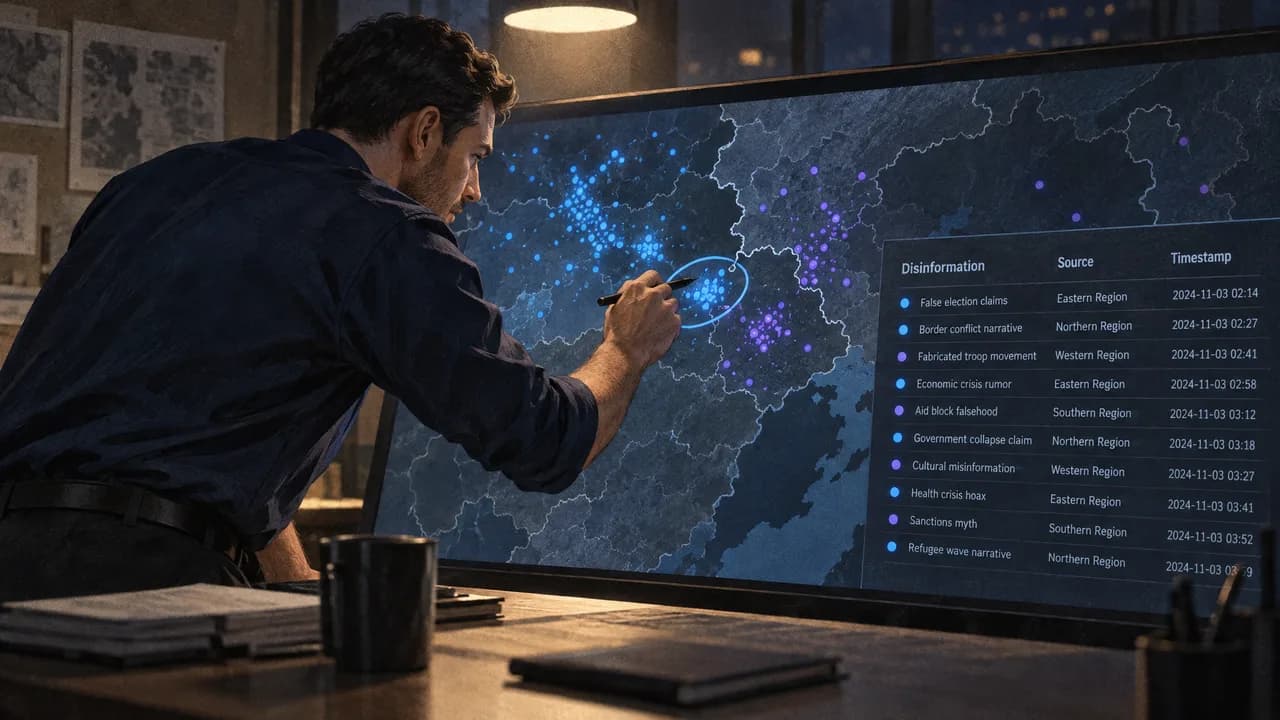
Everything happens inside a defined battlespace. Information warfare takes place within the "Information Environment," the aggregate of individuals, organizations, and systems that collect, process, disseminate, or act on information (JSIS, University of Washington). For an executive, that aggregate is mostly private infrastructure you do not control: broker databases, search indexes, scraped archives, resale feeds. If you have not read the mechanics of information warfare as a defensive problem, the Army's framing is the cleanest starting point available, because it never pretends the environment is yours to command. You operate inside someone else's terrain and try to hold the initiative in it.
Where Civilian Programs Fall Apart
Corporate programs collapse in the same three places, and none of them is a budget problem.
The first is delegation without a loop. A company buys a scan, receives a report, and treats the report as the outcome. The Army's own language rejects that shape: information advantage is held in situational understanding and decision-making, which means the value sits in the ongoing comparison between what you knew and what changed. A report is a snapshot of a battlespace that reconfigures daily. Most buyers get this wrong on day one because the deliverable looks finished, and finished deliverables invite shelving.
The second is org-chart thinking. Splitting protection, monitoring, and reputation repair across three vendors produces three partial pictures and no single operator who sees the whole board. The doctrine integrates five activities precisely because a unit that runs them separately loses the initiative to a force that runs them together. Civilian equivalents behave the same way: the removal vendor does not know what the reputation team published last week, and the monitoring tool does not know which broker already re-listed a record after a successful opt-out.
The third is static threat modeling. A 1996 Army War College Parameters piece on information warfare and deterrence already treated the problem as one where signaling and perception shift the calculus rather than a fixed target list (Harknett, Parameters, 1996). Thirty years later the same mistake shows up in annual threat assessments: a document produced in January describing an exposure landscape that changed by March. The vocabulary of the standard warfare definition covers the doctrine well enough. What it never covers is decay.
The gap between detection and removal
Detection and removal are different operations with different clocks, and conflating them is the most expensive shortcut in the category. A vulnerability scan tells you what is visible. It changes nothing about that visibility. Removal is a formal request process against companies that treat personal details as inventory, and it produces a result that expires. Treating the scan as the work means you paid for reconnaissance and called it victory.
Running the Five Activities Against Your Own Name
The translation is direct enough to run without a defense contractor. Each activity below maps to a concrete step against one executive's exposure, and the steps run in order because each one's output feeds the next.
- Establish the information environment: pull every public record tied to your name, addresses, emails, and phone numbers across brokers, people-search sites, and breach compilations. This is enable, and it produces the map everything else works from.
- Harden what is already exposed: fix the credentials, aliases, and registration trails that let third parties tie your identity together. This is protect, and it is the only step that reduces attack surface rather than visibility.
- File removals and suppress what cannot be removed: opt-outs against broker listings, and published or amplified content where the record itself is durable. This is inform and influence, applied to the record set rather than to an audience.
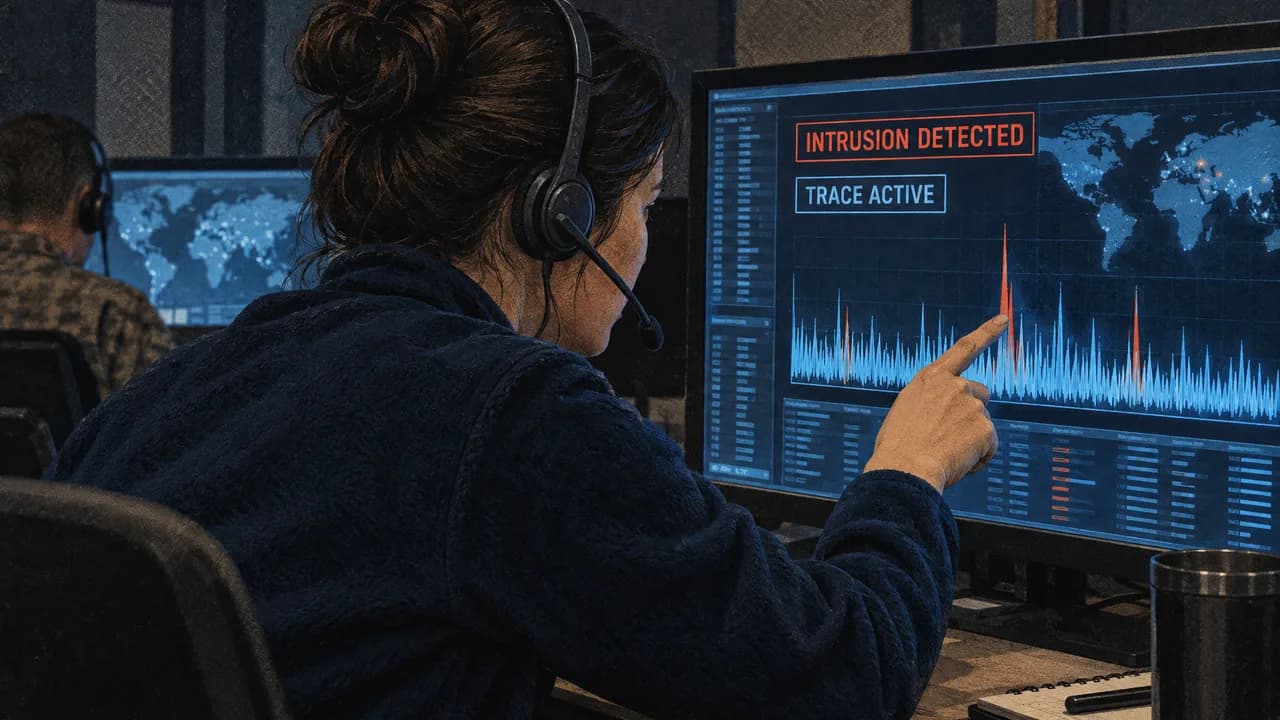
- Re-scan on a schedule that matches re-listing behavior, not your calendar. Brokers re-ingest from public sources continuously, so a quarterly review will always read a stale board. This is the held-initiative step.
- Test your own perimeter on the same rhythm you test systems: penetration testing and vulnerability scans against the personal and infrastructure footprint an attacker would actually use.
A dedicated operator owns the loop. Our engagements assign a Digital Guard per client for exactly this reason: the five activities degrade into five unconnected tasks the moment nobody holds the whole board. The same logic applies to content: positive creation and amplification are not vanity work, they are the influence layer that gives the removal layer somewhere to point, and suppression without that layer leaves a vacuum that re-scraping fills.
Mistakes That Turn a Defense Program Into Theater
Buying removal as a one-time project is the mistake that costs the most, because it looks like success for about six weeks. Opt-out requests work, then brokers re-ingest the same records from public sources and the listing returns under a slightly different URL. A removal campaign without a re-scan schedule is a cleaning service for a store that restocks every night.
Treating public exposure as harmless is the second. Executives discount broker listings because each individual record looks trivial, and they miss that aggregation is the product. A home address plus a phone number plus a family member's name is not three trivial facts; it is a targeting package, and it is assembled and sold without your participation. The same discounting shows up in credential hygiene, where an old registration email is quietly the join key between two identities you thought were separate.
Assigning the work to whoever has spare capacity is the third. Information defense run by an IT generalist between tickets produces sporadic activity with no continuity, which is worse than nothing because it manufactures confidence. This is a standing function with an operator, a schedule, and a written record of what changed and why.
Static annual threat assessments are the fourth, and they fail for a structural reason rather than a competence one. A threat picture assembled once a year describes a battlespace that no longer exists by the time it circulates. The corrective is cadence, not more thoroughness: shorter cycles, smaller reports, faster decisions.
Finally, treating dark web monitoring as the whole program. It is one sensor, and it reads only the fraction of exposure that surfaces in monitored channels. The records that damage executives most often sit in plain sight on broker sites that have never been breached, precisely because they are meant to be found.
What the Published Counts Tell You
The Army's public writing is unusually direct about why any of this matters. In its own language, "because the status quo is no longer acceptable, the Army must develop new doctrines, forces and doctrine to address the reality of war and warfare" (AUSA, Information Advantage). That sentence is a rejection of the status quo as a viable position, and it applies with uncomfortable precision to the corporate default of occasional scans and annual reviews.
Read the doctrine revisions as a timeline and the pattern is a service that changed its own structure twice in a decade, moving from a category list toward an integrated framework. Organizations that revise doctrine on that rhythm are telling you the environment outran their previous model. A defender who still runs a static program is operating on a model the Army itself retired.
The counts worth tracking on your own side are not industry benchmarks, because the category does not publish reliable ones. They are your numbers: how many broker listings carry your name today versus 90 days ago, how many were removed and how many returned, how many credential exposures are still live. That is the situational understanding the framework describes, and it is measurable without a vendor's dashboard.
Where professional help changes the arithmetic
We are a digital protection and reputation management service in McLean, Virginia, and we combine reputation work with cybersecurity rather than selling them separately. That means content creation and amplification to occupy the space a suppressed record leaves behind, data broker removal and suppression against the listings themselves, dark web monitoring for the exposure that surfaces in monitored channels, and vulnerability scans and penetration testing for the perimeter an attacker would actually probe. Every engagement carries an assigned Digital Guard who holds the board.
If you want the exposure map before you decide anything, contact us at greyman@a52.io or call +15712102227. Our address is 1350 Beverly Road, STE 115, PMB 175, McLean, Virginia 22101. The first pass is reconnaissance. What you do on a schedule after that is the defense.
Frequently Asked Questions
What is information warfare in the military?
In military usage it is the integrated employment of capabilities to affect information and the systems that carry it, conducted inside what doctrine calls the information environment: the aggregate of individuals, organizations, and systems that collect, process, disseminate, or act on information. The Army's current framework bundles it with four related activities, enable, protect, inform, and influence, under the single goal of holding information advantage. The key word is integrated. The activities are run together as one operation, not handed to separate offices.
What is the Army's most secretive unit?
The Army does not publish an official ranking of its least-visible units, and any list you find online is assembled from inference rather than disclosure. What is documented and public is the doctrine: units integrate five information activities, enable, protect, inform, influence, and attack, to create information advantage, and specialized elements exist to execute parts of that mission (Army University Press). Questions about which specific element is quietest run into classification, and an answer sourced from speculation is worth less than no answer.
What are the 7 phases of unconventional warfare?
Unconventional warfare is a distinct doctrinal concept from information warfare, and published descriptions of its phases vary by source, which is why the number seven circulates without a single authoritative list behind it. The two are related but not identical: unconventional warfare describes operating through or with irregular forces, while information warfare describes contesting the information environment itself. For an executive defense program, the phase count is not the useful part. The useful part is the structure of a continuous, phased campaign rather than a one-time action, which both concepts share.
What is the toughest job in the Army?
Any answer is a matter of perspective rather than doctrine, and the Army does not rank its roles by difficulty. The more useful observation is that difficulty in military work concentrates where a person holds continuous responsibility for decisions with incomplete information, which is the same profile that makes sustained information defense hard in a corporate setting. Holding the initiative in situational understanding requires someone accountable for the whole picture on an ongoing basis, not a committee that convenes when something goes wrong.
Sources
Sources checked on September 28, 2026.
Get new articles by email
New articles from Area 52, sent to your inbox.
By subscribing you agree to receive emails from Area 52 about new articles. You can unsubscribe at any time.